
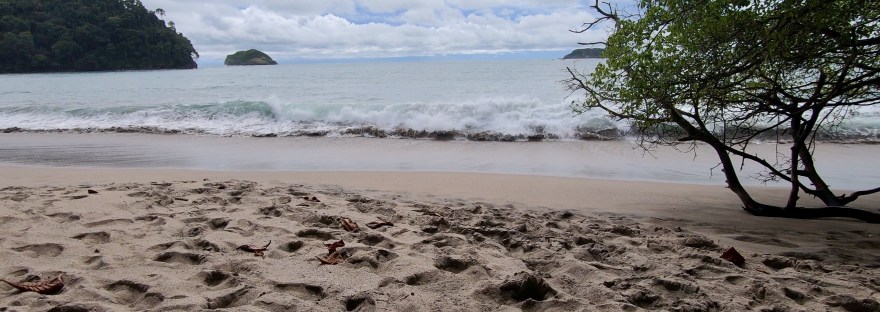
In Manuel Antonio we are welcomed by humidity, and Carlos, the owner and heart of the B&B we booked for the next three nights. He knows everything not just about the immediate surroundings but about the country in general – and he spots and shows all the animals that hang around his jungle home: the sloth that lives in the tree next to the house, toucans, and a woodpecker.
We pick up some dinner in Quepos and enjoy the jungle sounds on the terrace. The next morning at 7, we are served a delicious fruit platter, fresh juice and a breakfast burrito (yum). Carlos explains all the do’s and dont’s of Manuel Antonio national park and we are soon on our way, with a little lunch box prepared by Carlos’ wife Marina.
A note about food in Manuel Antonio National Park
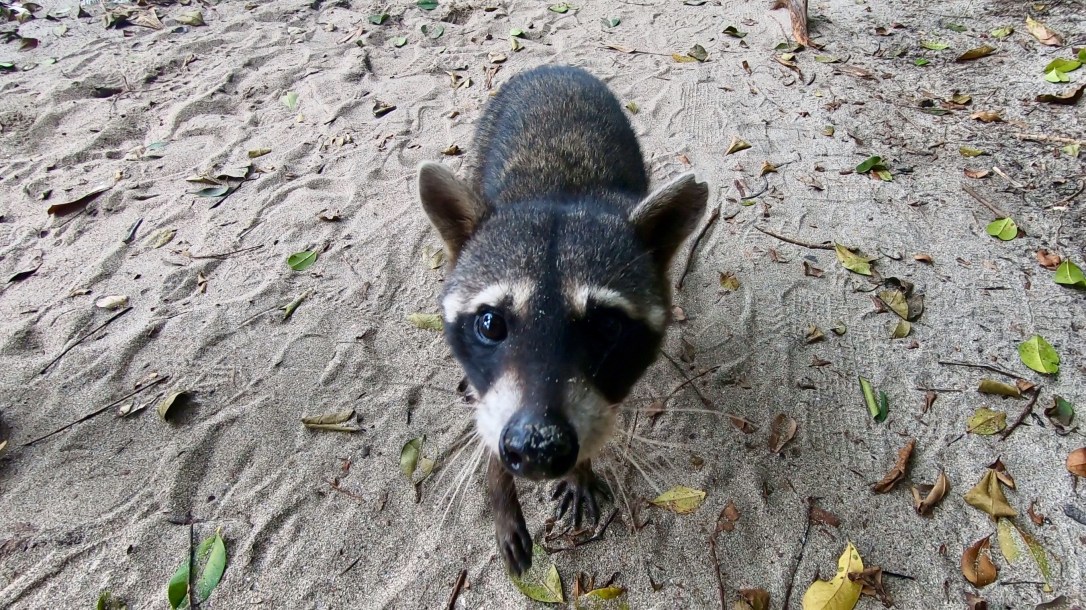
Food rules are strict in the park: you may bring prepared and wrapped sandwiches, small fruit like apples or any kind of fruit cut into pieces, and water, juice or sodas; any other food (e.g. granola bars), alcohol, as well as cigarettes, may not enter the park and the rangers will look through your backpack and will enforce the policy. Even if you could bring a full blown picnic to the park, it would be difficult to enjoy it unless you walk to very remote corners. At the most popular beach (Manuel Antonio), monkeys, raccoons, and even lizards are trying to have a bite of your food, although lizards mostly practice a more passive form of attack by trying to stare you down. Still, we did see a lizard jumping towards a woman’s sandwich as she jokingly offered it to him (smart idea); we munched on our sandwiches on the more remote beach (Playa Gemelas), but by the time we’ve gotten to the fruit, a lizard started his staring contest so we decided to pack up; minutes later some monkeys arrived who would’ve probably been more difficult to get rid of. We would therefore recommend not to plan for an extended picnic at the park but just something to keep you going through your visit. Most importantly, bring plenty of water/big bottles to refill at the drinking water taps. If you’re starving when leaving the park, a bunch of options are near the entrance.
Carlos’ prediction is right: as we near the park entrance, people jump on the street and try to lure us into their parking lots, which are further away and more expensive than the official parking. Thanks to Carlos, we know better and continue to drive, unimpressed by their waving and yelling.
A short rain shower later, we have acquired our tickets and the ranger approves the contents of our backpacks for entrance into the park. Manuel Antonio is the most visited national park in the country. We are off season now and on a weekday, but it is definitely one of the busiest places we see during our two weeks; this being said, the only place where really many people stay in one spot is Manuel Antonio beach. The trails (some wooden, some concrete, few are “plain” jungle trails) are fairly quiet once we pass the entrance. We make our way to different viewpoints and different beaches. We see capuchin monkeys and raccoons, lizards of different sizes and colours, one lazy sloth hanging from a tree, one peccary (looks like a tiny brown boar), a coati, many butterflies, and we hear the impressive scream of the howler monkey.
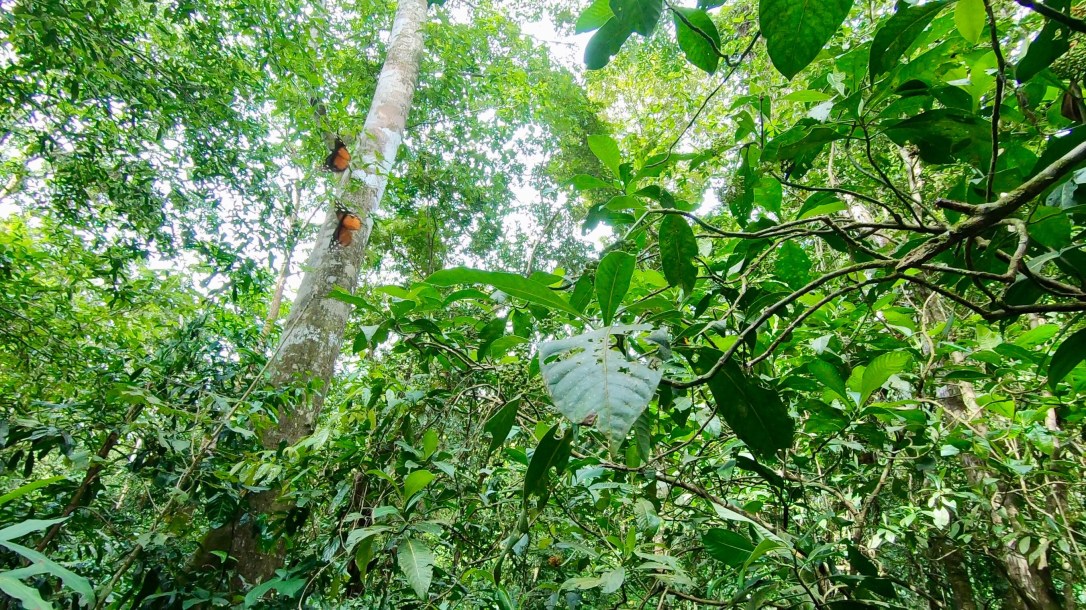
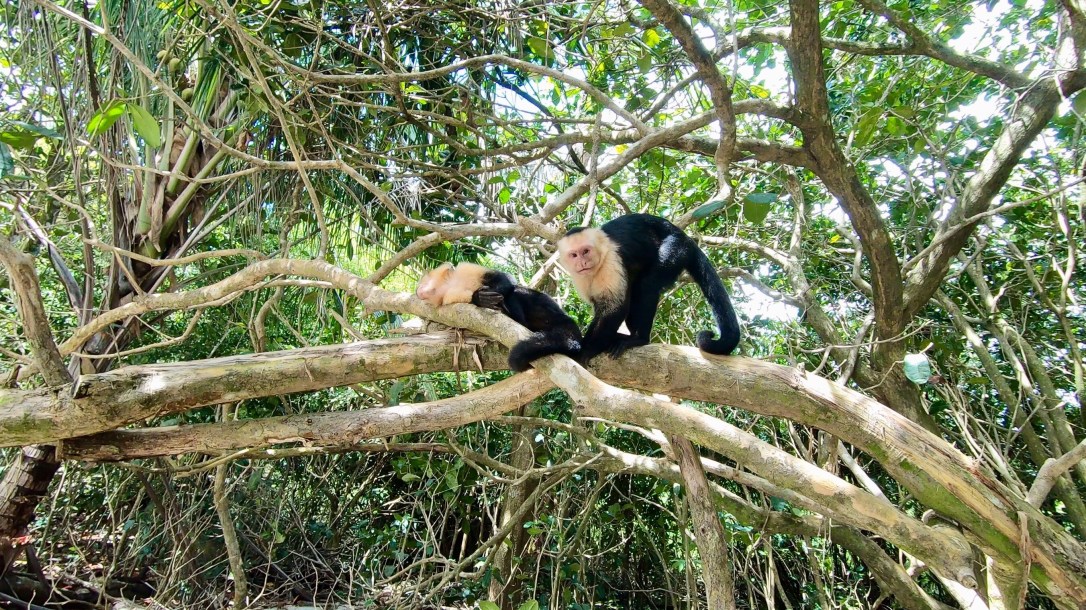
Before we know it, five hours have passed by. We walk through the waves on Playa Espadilla Sur before getting ready to leave this wonderful place. Touristy as it may be, the jungle coming up to the beach has a special atmosphere. There is a daily limit of visitors, so in high season, you must make sure to be there early. In hindsight, we think a guided tour could have been nice here, as the professional eye and the telescope surely help to spot more shy inhabitants of the park. But even without guide, we had an incredible time there.
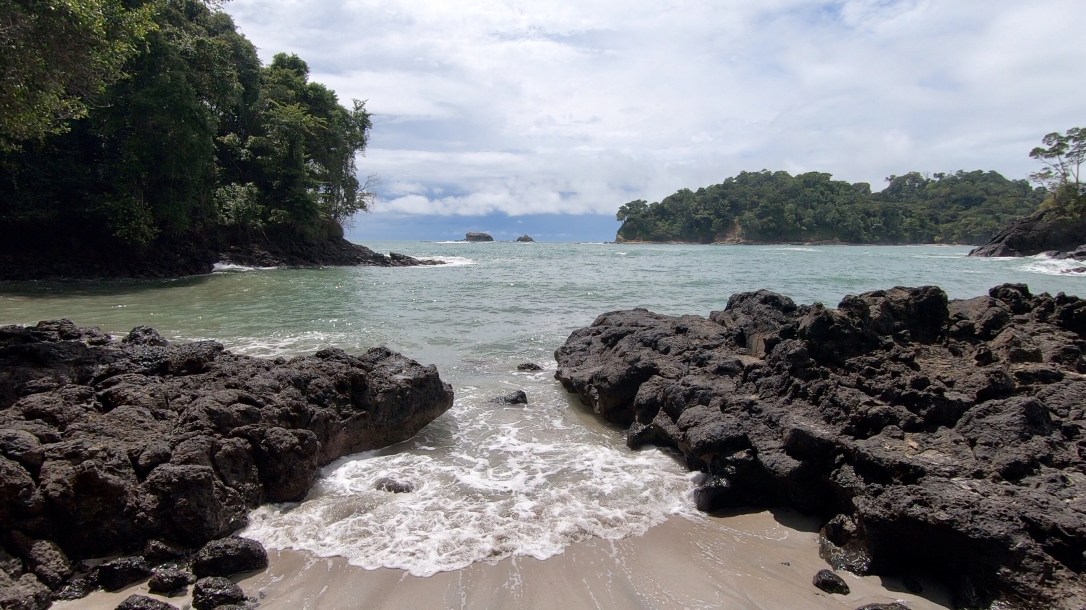
Back at the B&B, Carlos has good news for us. In the morning, he had promised to call (whom, we don’t know) and find out if there are still whales around and indeed, they are. Whale season is from September until end October. They come to the coast of Costa Rica to mate and give birth, as further south, the waters are too cold. We confirm our tour in Uvita for the next day. Around 9am the next day, a small group of people, including us, makes their way to the beach of Marina Ballena national park to go and look for whales. The boat has the size that we feared to have for the diving trip. As we leave the beach, the weather is nice but the sea is already slightly agitated. Not for the lighthearted! After about an hour, we see a spout ahead of us – score. We see the large back of the whale coming out of the water – followed by the smaller back of her calf. Amazed by this wonder of nature, we sit in silence and try to capture the moment on camera as good as we can.
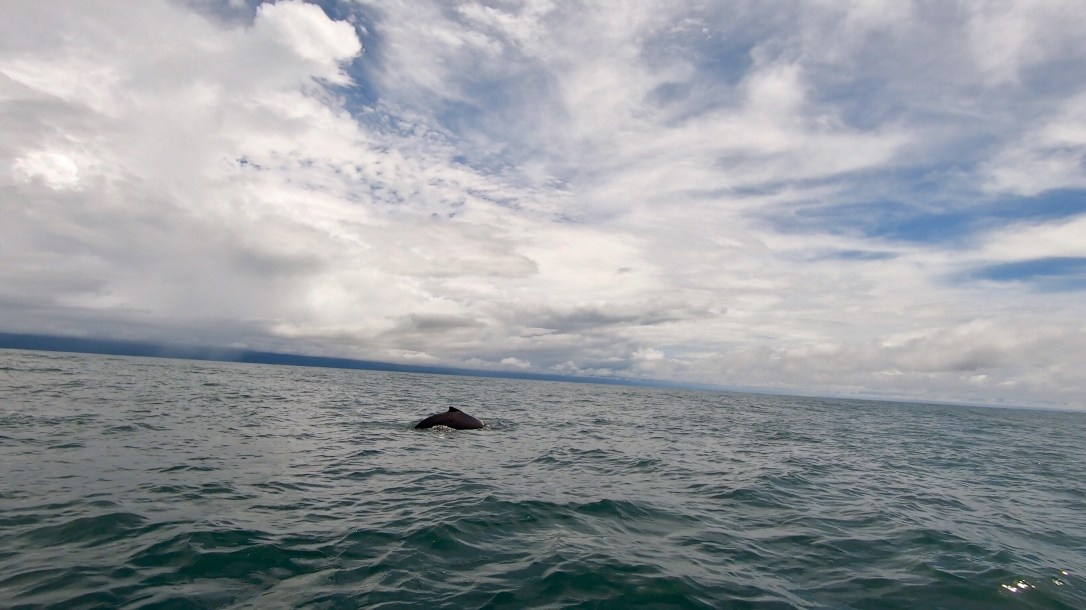
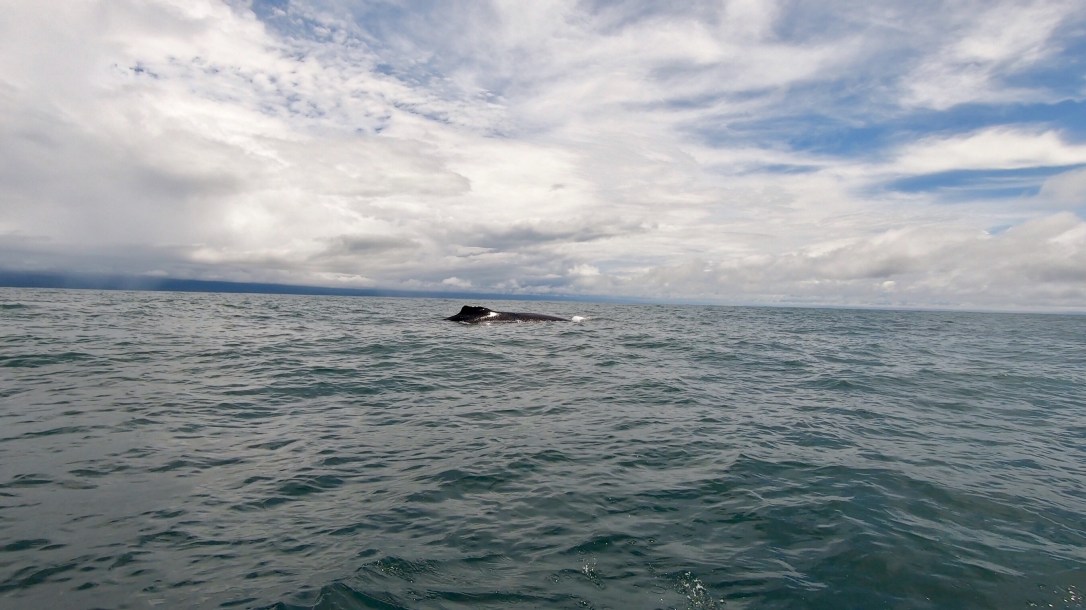
We follow them for a little while – the guide explains that the calf is exercising for the long swim ahead to the south. On our way back, we can see that on the mainland it is raining already; our backs starts to hurt from the rough ride and Julia’s stomach is a little iffy from the boat sitting on the waves while watching the whales. But we are not done yet, as we were promised to be shown some rocks and caves. We are thankful when we finally do step off the boat. It’s always amazing to see whales, but it was a little bit late in the season. Carlos later tells us that he had seen 17 whales earlier in the year. After the obligatory stop at the soda, we drive to a cafe close to our B&B with an amazing view, perfect for sitting out the rain. However, the rain won’t really stop again until we leave the next morning and we realise how lucky we were with the weather so far. In the morning, just before we leave, we are lucky one more time: the sloth is waking up and crawling about the tree – quite the spectacle! Our next stop is north of the capital: the Poás volcano.
Accommodation : MyCasa’s B&B
+ great location almost in the jungle, surrounded by trees full of animals; wonderful owner who personalises the experience for everyone and is a walking guidebook; super flexible for dietary restrictions, different breakfast (included) every day
– the beds were comfortable and the shower was good, but rooms were incredibly humid; this might be an issue for the whole region, we don’t know (it rains A LOT while being very hot); humidity was a little better in the upstairs rooms, the bigger apartments are downstairs though.

 lookingforcoconuts