And here we are, three days into our 7 months trip! This moment has been in the making for a really long time, as it’s been more or less 5 months since we announced our plans at our workplaces and preparations could officially begin. A few days before we left, we were quite surprised as to how well prepared we were.
Of course, we are not the first people to go on this kind of an adventure, and there is abundant advice on preparing and packing out there. To us, the most valuable resources were the following: twowanderingsoles.com, neverendingvoyage.com, and mifuguemiraison.com. As you browse through different blogs, you will soon find that a few items keep coming up.
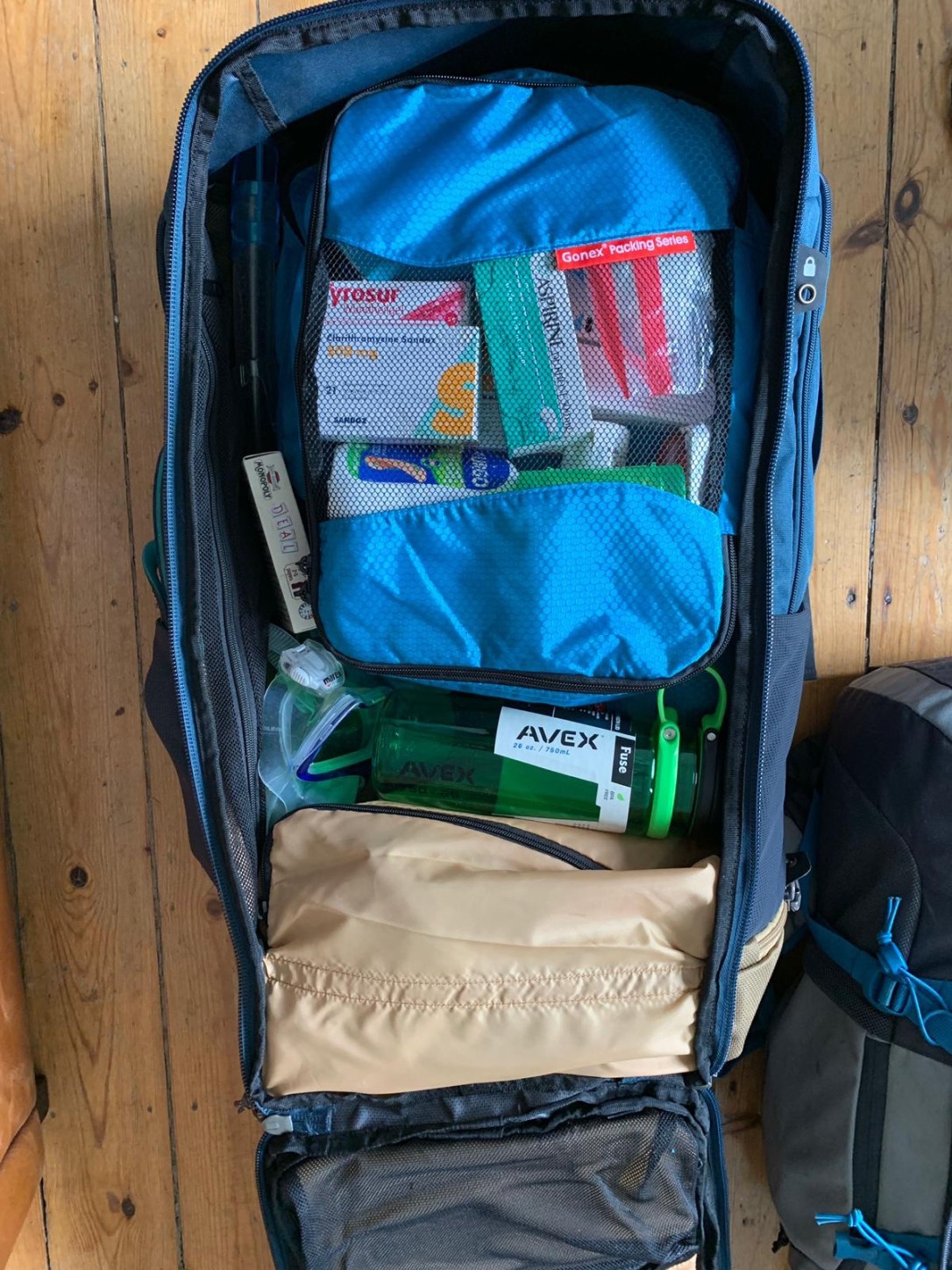
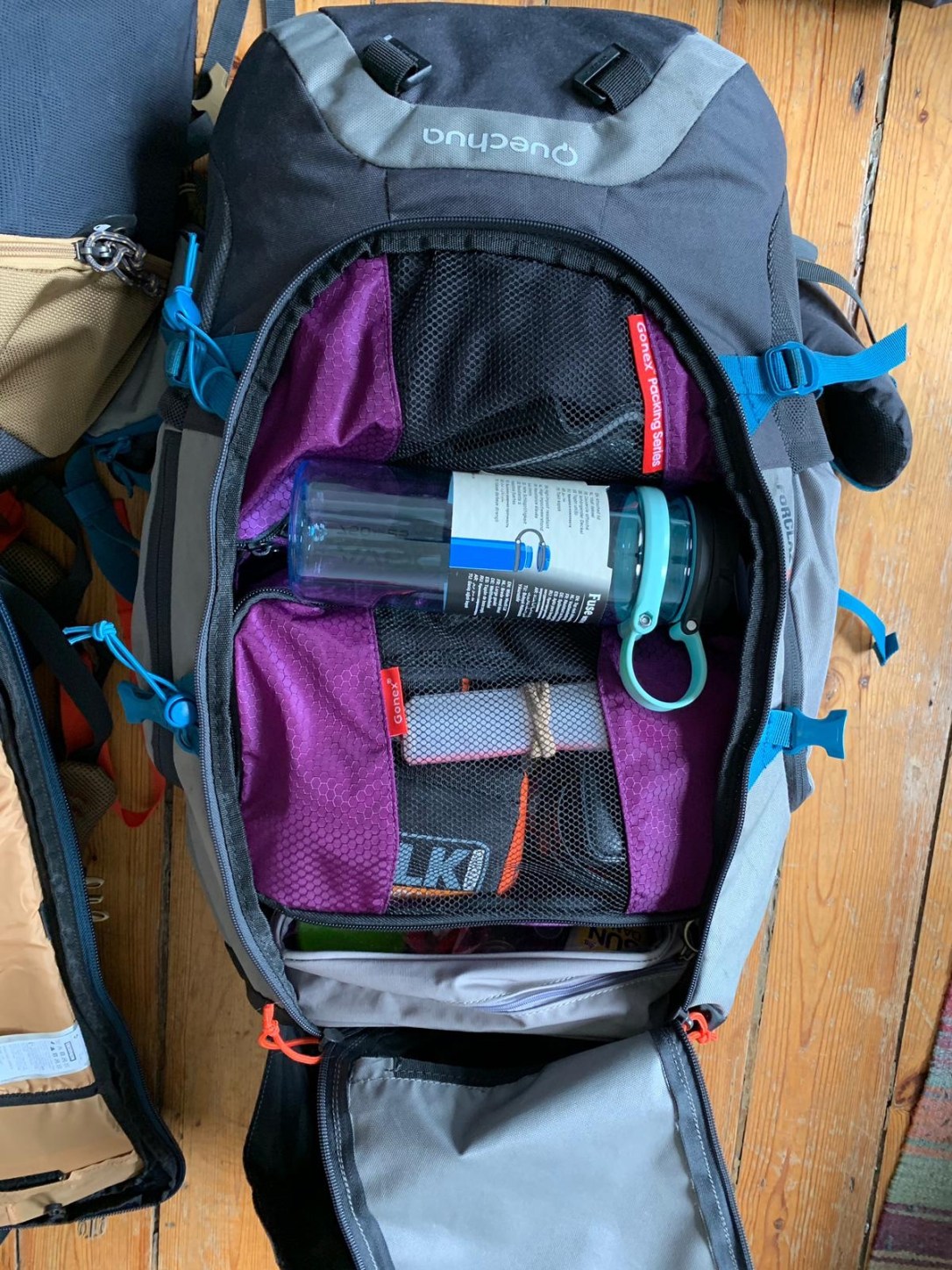
- Packing cubes: this is the first time we use them and even after just a couple of days, we are super happy. We bought four each. Julia filled her three big ones with clothes, separated into 1) pants, shorts, skirts and dresses, 2) tops, and 3) underwear, socks, and swimsuits. Brice filled two big ones with 1) t-shirts and 2) pants, underwear, swimsuit, and socks. This left us with 2 small cubes and 1 big cube to fill. We put all our medication in the big one. The two small ones are filled with 1) electronics and cables and 2) tools and gadgets (ranging from a clothes line to a spork to binoculars – more details below). We rolled up our clothes in the cubes, so you can see exactly what‘s in there (hello, Marie Kondo). It‘s much easier to look for something, and to put everything in and out of the backpack.
- Water bottle: to reduce your environmental impact, and to spend less on water, make sure to have a water bottle with you. Depending on where you go, you may need a water filter as well – we opted for the Steripen (more details below).
- Microfibre towel: not the most amazing drying experience, but very handy. Can double as cushion, blanket, scarf… (remember the Hitchhiker’s Guide through the Galaxy?).
- Solid toiletries, where possible: avoids packaging waste and spilling – win win! By now, you can find pretty much everything solid, for example in shops like Lush (Julia was very intrigued by a brand called Ethique, but it was not available in Europe). We have a solid shampoo and a solid face wash from Lush, and a plain old bar of soap for sensitive skin.
- Finally, the least heavy but possibly most important thing: travel insurance. Brice is still employed and is covered by his employer’s insurance EuropAssistance. If this applies to you, make sure to check the maximum duration it covers. For Brice, it’s 4 months and he will check if he can pay extra to extend this duration. If not, he can take the same insurance as Julia, which is True Traveller. She chose this based on the very good reviews and the interesting price. We haven’t claimed anything so far, so in case we need to, we will give more detailed opinions.
One very important piece of advice that we kept repeating to ourselves while choosing which items to take was: with the exception of medication and small tools like a sewing kit, don‘t take anything „just in case“. An example for this would be fancy clothing or shoes. If your trip is anything like ours, you won‘t need them. We were just in Hong Kong and decided to go to afternoon tea, as it’s a special experience. We checked and it was easy to find places that don’t specify a dress code. If you plan to only do fancy bars and restaurants in big cities, then your travel style is probably entirely different from ours (would still recommend the packing cubes though, they are great :)). And of course, your „just in case“ varies according to your destination. When you travel through North America or Europe, you may not need a water filter. When travelling through Southeast Asia, you may not wanna take jeans or wooly sweaters. Hiking boots may be essential in South America, but will you need them in Asia (depends a lot on where you go!)?
Ok, so let’s have a closer look at what we took with us.
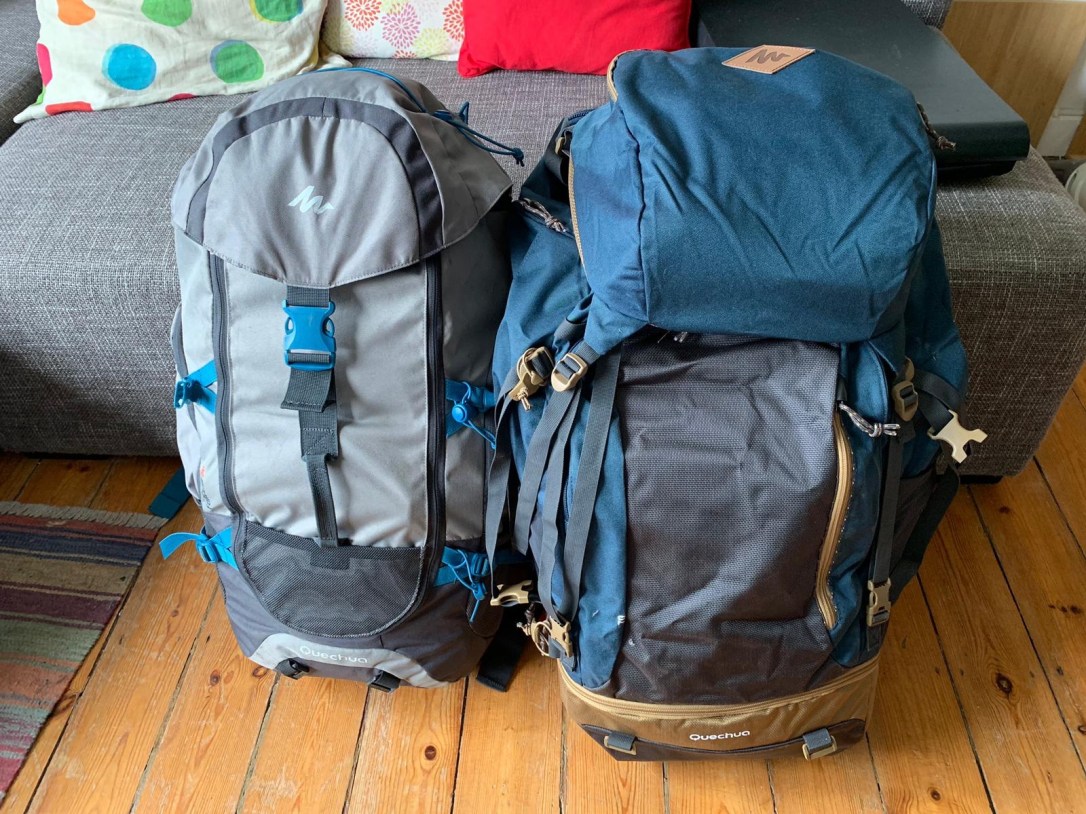
Each of us has a backpack. Brice’ backpack has a detachable top, which he used as cabin luggage during the flight to Hong Kong. He also has a foldable lightweight backpack, to use as cabin luggage or as daypack. Julia has a foldable daypack and a handbag with plenty of little zipped pockets. On the long-haul flight, she took both in the cabin as the handbag only would have been too small to carry toiletries, travel pillow, eye mask… in addition to iPad, book, and documents. For the future flights, the plan is to only have the handbag as cabin luggage. We also have rain covers for our backpacks. Brice received a waterproof bag as a present – this will certainly turn out to be very useful when we want to take a dip without leaving our valuables unattended or if we need to get off boats in water higher than expected.

Note that we created this packing list with our Southeast Asia trip in mind, meaning a tropical climate. We haven’t thought about whether it would be applicable for other places.
Here is Julia’s packing list:
Tops
- 6 tank tops (both cotton and active wear, 1 is worn as pyjama)
- 2 t-shirts (1 cotton, 1 active wear)
- 1 long sleeve (cotton)
- 1 zipped hoodie (the Uniqlo dry sweat hoodies are one of our favourite travel companions)
Bottoms and dresses
- 3 pairs of shorts (2 active wear, 1 cotton)
- 2 pairs of leggings (1 active wear, 1 cotton)
- 1 pair of light cotton trousers
- 1 pair of hiking trousers (the type that you can turn into shorts by zipping of the lower legs)
- 1 long skirt
- 1 long dress
- 1 short dress
Underwear
- 2 wireless bras
- 1 sports bra
- 10 pairs of underpants
- 4 pairs of socks
- 1 pair of pyjama shorts
- 2 bikinis
Shoes
- 1 pair of trainers
- 1 pairs of flip flops
- 1 pair of flip flops with heel strap
Other
- 1 baseball hat for sun protection
- 1 scarf
- 1 buff
- 1 foldable raincoat
- Sunglasses
- Glasses
- Collapsible hair brush
- Yoga paws
- Microfibre towel
And here is Brice’s list:
Tops
- 4 t-shirts (3 cotton, 1 active wear)
- 1 long sleeve (cotton)
- 1 buttoned shirt
- 1 zipped hoodie
Bottoms
- 1 pair of sweat pants
- 2 pairs of hiking trousers (the type that you can turn into shorts by zipping of the lower legs
- 1 swim suit (doubles as shorts)
Underwear
- 6 pairs of boxers
- 3 pairs of socks
Shoes
- 1 pair of trainers
- 1 pair of flip flops
Other
- 1 baseball hat for sun protection
- 1 scarf
- 1 foldable raincoat
- Sunglasses
- Snorkelling tube and mask
- Microfibre towel
Let’s have a look at the stuff that we share (mostly):
Electronics
We both took our iPad and a Bluetooth keyboard. Brice also took his GoPro with equipment for underwater use, and his Bluetooth speakers and headphones. We have one packing cube full of adaptors and cables for all of this.
Toiletries
We have three toiletry bags. A small one to take on the plane, a big one with our every day use articles and the third contains all our „refills“, especially sunscreen. We had so much left at home that we didn‘t want to waste it. At least our bags will be getting lighter over time. We share most toiletries, even if Julia‘s skin care routine is slightly more elaborate. As said, where you can, go for solid products and try to find travel-friendly solutions. If you need very specific products, see if you can stock up on them somewhere along your itinerary in case you run out, so you don’t have to carry tons of it (brands like Lush are available world wide).
- 1 soap (cut into three pieces, so the one in use fits into a little tub)
- 1 solid shampoo tab
- 1 solid face wash
- Leave-in conditioner
- Electric toothbrush (we bought new ones with long battery life)
- Toothpaste
- Moisturiser for face and body
- Sunscreen for face and body
- Deodorant
- Nail clip, tweezers etc.
- Hand sanitiser
Tools and gadgets
This is probably the category where we purchased most things specifically for this trip. We already spoke about the water bottles above, but wanted to say a few words about the sleeping bag liners and the water filter. As we may take night trains and stay in very basic accommodation every now and then, we followed the recommendation to take sleeping bag liners. The point is to avoid sleeping on questionable sheets or to replace sheets if there are none. We were lucky to stumble onto a promotion for silk sleeping bag liners, which are supposed to be the best from a comfort point of view, in addition to being as light as a feather. We paid 70€ for both of them, usually the price is double. We will certainly test them at some point during the trip, even if we won’t need them. Whether or not you should take a liner with you will depend a lot on where you go, how you plan to travel, and at what kind of accommodation you plan to stay.
The item we researched most was definitely the water filter. We finally opted for the Steripen, despite its high cost, as it seemed the most reliable and effective – it works for both bacteria and viruses. As said above, we took the water bottles to avoid creating waste, which is something we do at home as well. We are lucky to live in a place where we can drink the tap water. Unfortunately, for most countries that we travel to, this is not the case. Enter the Steripen. In 90 seconds, it can filter 1 litre of water to make it drinkable. The UV light can filter 8000 litres and has a lifetime guarantee. With this handy gadget, we hope to always have drinking water at hand. Just note that the water must be clear (no sediments or muddy water) and that you need a bottle/container wide enough to immerse the pen.
In addition, we have the following items with us:
- 1 sewing kit
- Super glue
- Clothes line
- Detergent
- 1 Swiss knife
- 1 spork
- 2 headlamps (for walking outside in the dark or for replacing a reading light)
- Binoculars (one of the few definitely non-essential items, but fun)
Travel pharmacy
Don‘t forget to consult your doctor or the nearest travel clinic for any vaccinations you may need. Make sure not to do this too late, as some vaccinations require two shots with a couple or several weeks between the first and the second. There, you will also be advised about any other medication, prescription or not, that you should take with you.
Our medicine cube contains the following:
- Malaria pills
- Aspirin
- Antibiotics (we have two different kinds as Julia is allergic to penicillin)
- Antihistamines
- Immodium
- Pills against travel sickness
- A small first aid kit, which includes also tweezers for ticks
- Tiger balm
- A disinfectant gel
- Mosquito spray
Ladies, don‘t forget to stock up on any contraception you may be taking, as well as feminine hygiene products.
Finally, we took three books as well as our travel guide to Southeast Asia. We debated it a little while, but decided that we prefer browsing through the physical guide rather than a kindle version. Adds a few hundred grams to our luggage for sure and if we don’t use it, one of our visiting friends or family will be entrusted with carrying it home. As for the other books, once we read them, we hope to find used book libraries where we can leave and exchange them for new ones.
This is it! Looks like quite a long list, doesn’t it? However, it fits into our backpacks without any problems and it’s not heavy. Weighed at the airport, Brice’s backpack (including cabin luggage) was at 14kg (11kg without the detachable part), and Julia’s 9kg excluding cabin luggage.
We will see over the coming months how happy we are with the things we packed and with the items we purchased specifically for the trip. If there is anything that we find particularly useful or not useful, we will make sure to update you!

 lookingforcoconuts