
Apo Island
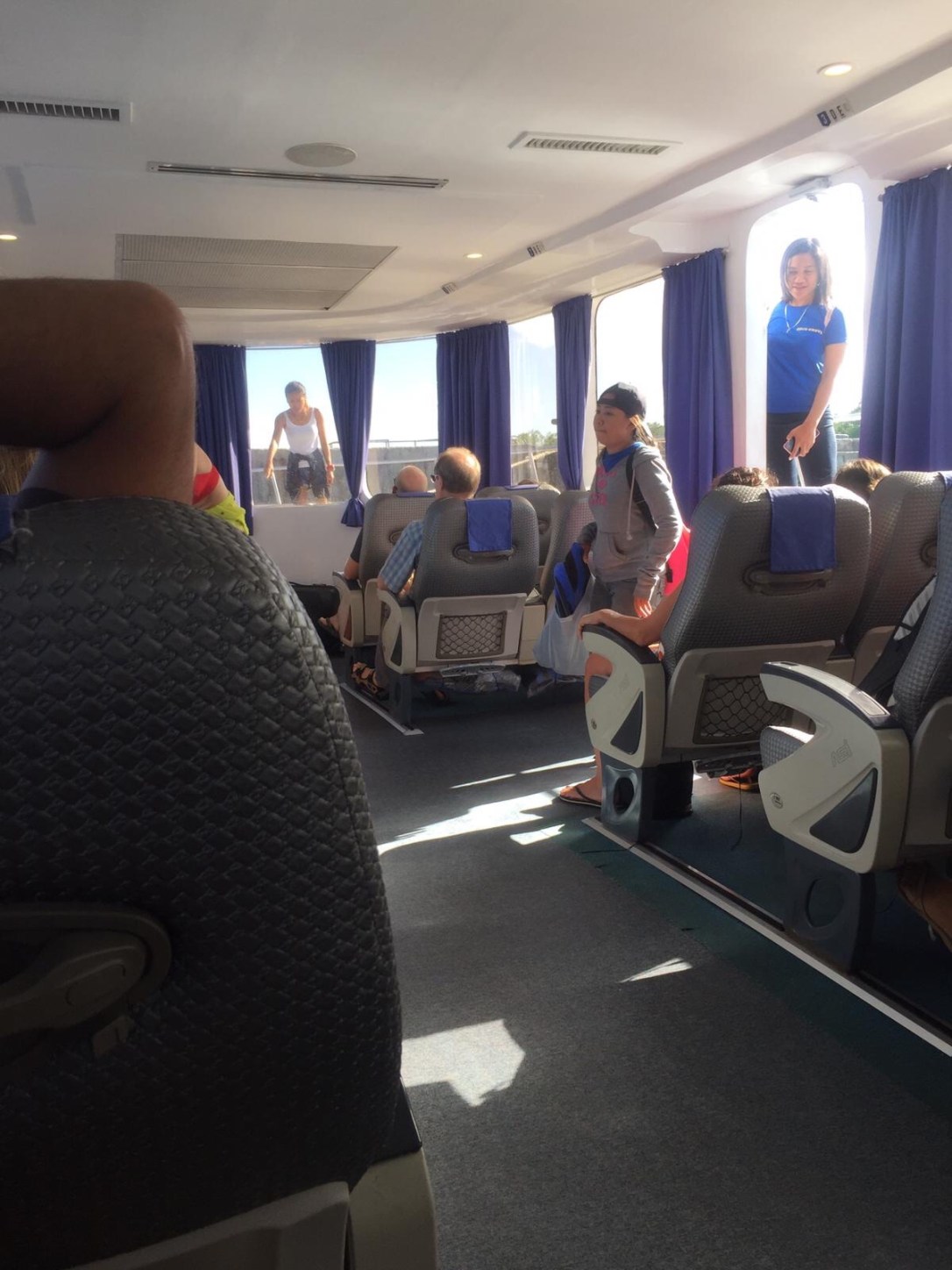
We’re a little bit sad to leave Siquijor. Maybe it’s the black magic that the island is known for in the Philippines, that enchanted us? Our next stop, however, sounds promising: Apo Island, also known as Turtle Island (you may guess why…). There are two ways to get there from Siquijor (if you discount swimming as a viable option): The first one is to take a ferry to Dumaguete on the neighbouring island of Negros, then take a tricycle to Malatapay, a small village, from where all the boats for Apo Island leave. Here, you hire a private boat for around 30€ or you find a spot on the next boat that is leaving (taking people, goods, whathaveyou) for 5€/person. The second option, which is the one we chose, is to book yourself a spot on a boat of Coco Grove Resort that goes on day trip to Apo Island from Siquijor. This costs around 15€/person and saves you probably at least half a day of travel. Not to mention: you arrive at Apo Island like royalty (not that that’s what we’re going for, but hey, if that’s how they do it). The boats we had spotted from the beach looked fairly small, so we were prepared: our backpacks protected with the raincovers, all electronics and documents in the dry bag, ourselves wearing bathing suits and quickdrying clothes. At 7.30 in the morning, Coco Grove staff loads all the day trippers and us into a range of vans. After 10 minutes, we arrive at the jetty. And the boat is basically a gigantic yacht. They serve us water and banana cake. Life is good. Small compensation for our effort: the yacht is too big to reach the beach at Apo Island, so we are put on a tiny boat to do the last 100 metres or so, before stepping off onto a wobbly jetty. Thank god we were prepared!
The day trippers are off snorkelling and diving, a few guests are taken to the fanciest resort on the island, and we register our arrival at Apo Island’s busiest beach, before walking a couple of hundred meters to our home for the next two nights: Mario’s homestay. Here, we are really in the middle of everything. Houses are almost wall to wall, everyone is kind of running through everyone’s patio, and of course: the roosters. If we thought they were loud in Panglao, the Apo Island rooster choir should prove us wrong. The island only has electricity from 6-10pm. Our homestay has running water and a shower – we found out that the Apo Island Resort, the mentioned fanciest on the island, doesn’t have showers, only buckets. (We also heard that it is very quiet though, so you need to pick your battle: roosters, or no running water).
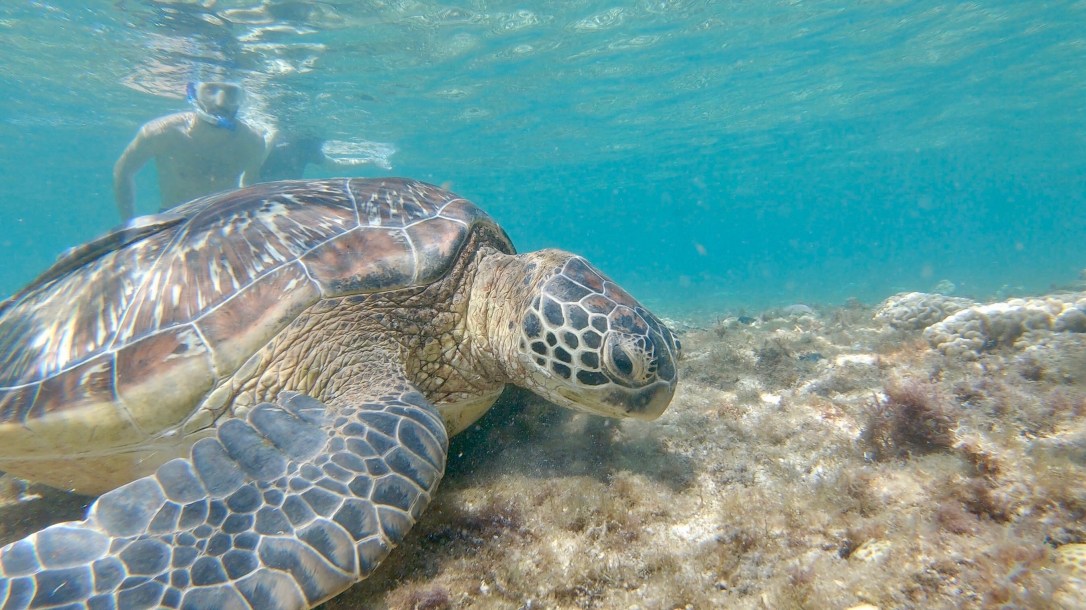
We find ourselves on Turtle Island, so the first thing we do is rent some snorkelling gear and a guide takes us on an underwater tour. Why a guide? Good question. They explain that without a guide, you are not allowed to access a certain marked area, which is the main feeding ground of the turtles, and visitors have disturbed them before. We do want to visit the turtles, of course, so we go with the guide. For 5€, the guide is yours for the entire day until 15h, when the tide gets very low and the turtles are retreating (you can still see them by yourself, of course). We have enough time for two snorkels and the turtles are just amazing. Peaceful giants, grazing quietly along the ground, not caring whatever happens around them. We meet a few of our friends from Tubod Beach, like the clownfish. The ground is also covered with very weird looking black sea cucumbers.
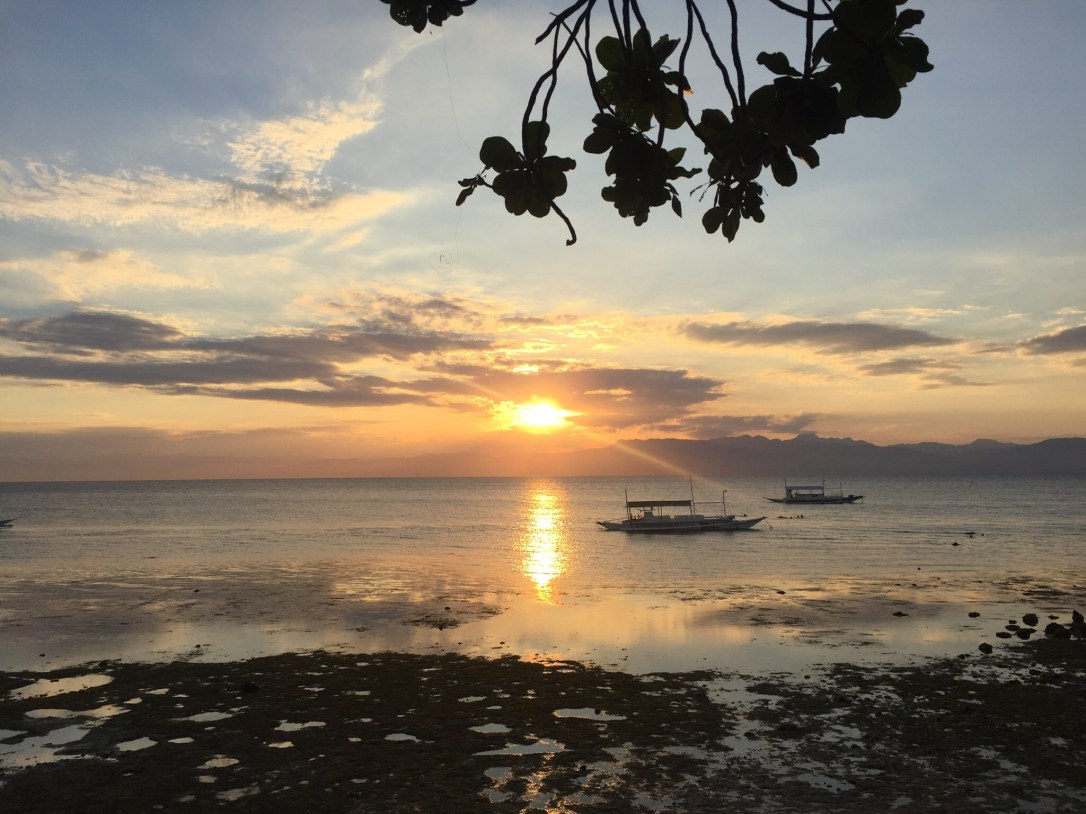
After all this excitement, we enjoy a quiet afternoon – all tourist boats depart around 14h and leave the island with its 900 inhabitants and the few tourists that stay in the handful of hotels and homestays. The sunset over the mountains of Negros is wonderful and with the sun setting, the island starts its few hours of electricity with everyone being busy having dinner, we also heard a few TVs running in the neighbourhood.
To be honest, the nights spent in Apo Island were not the most relaxing for us. The number of roosters seems disproportional to the number of people, and of course, there is also a good number of dogs. Both like to be up at ungodly hours, and when one starts to make noise, they are joint immediately by their companions. Plus, Filipinos are early risers (you wonder why) and they embrace it: loud music at 6am is not unusual.
(Nevertheless, we recommend to spend a night here rather than coming for a day trip. The atmosphere once the tourist boats have left is just unique. During the day trip, you can almost be sure that wherever you go to snorkel will be crowded. Note that the busiest time of the year is around Chinese New Year.)
After this rather sleepless night, Julia compensates with a Yoga class (yes, there is one Yoga teacher on the island), whereas Brice continues to explore the underwater world.

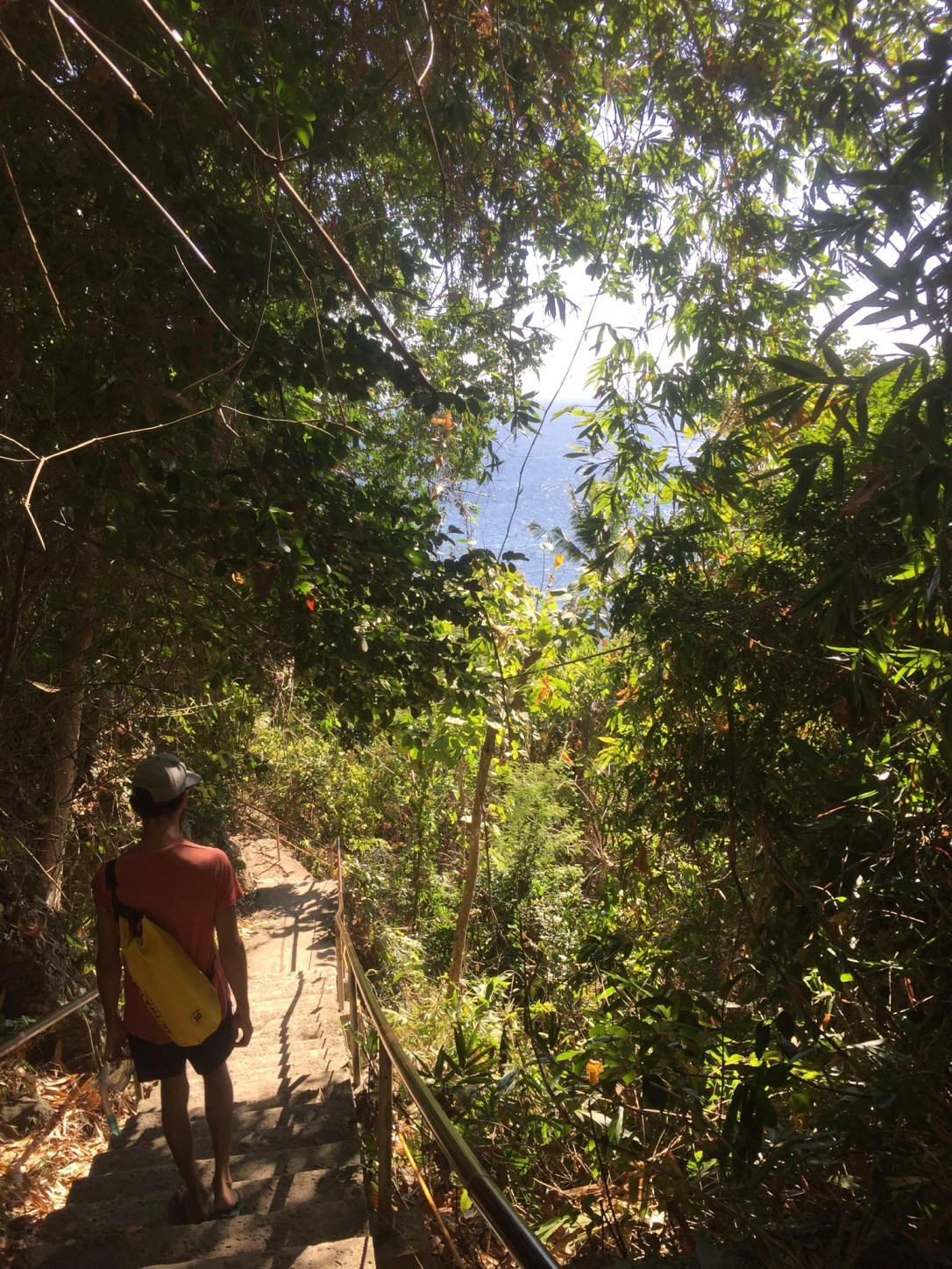
As we want to leave the next day, we also have to figure out how. We need to get to Negros, and, as explained above, there is no particular schedule, you just need to find a boat that leaves anyway, or arrange for private transfer. Your best bet is to leave early in the morning – there is always one boat guaranteed. Brice, asking for the time, makes friends with just the guy who is leaving the island the next morning and secures us two spots on his boat. With this sorted, there’s not much left for us to do! After lunch, we decide to be adventurous and walk up about 3 billion stairs to the lighthouse. The view is quite nice on top of the hill, but especially when going back down, when the blue of the sea mixes with the lush green of the forest. One more dip in the sea, and it’s almost time for the sunset again.
This is what the days on Apo Island are like. The main tourism draws are snorkelling and diving. Once this is done, you can take little walks, take a nap, have a banana shake… and repeat the next day. We stayed about a day and half on Apo Island. As we didn’t dive or wanted to do any extended snorkelling tours, this was perfect. You can come for a daytrip from many other places in the Visayas, but it is quite special to spend a night here.
Activities
Snorkelling
As described above, you can do this with or without a guide. The guide costs 5€/day for as may snorkels as you like. If you want to stay close to the beach, you don’t really need the guide, as you will see plenty of turtles even if you can’t go into a certain area. If you want to go a bit further, the guide can be useful, first of all to direct you and he also has a life buoy in case you get tired. The full amount you pay goes directly to the guide. You can also book a snorkelling tour around the island if you want to see other spots.
Diving
We didn’t dive, but it must be mentioned of course, as it is a pristine diving location. Our hotel Mario’s homestay has a renowned diving shop and people seemed very happy. The other hotels also have dive schools, and there may be others that we didn’t see.
Walking/hiking
We walked up to the lighthouse, took 20 minutes or so. You can walk to other viewpoints and beaches but make sure to check what kind of shoes you need to wear, as we heard that for some you need at least trainers (i.e. not flip flops).
Yoga
At the time we visited, there was a yoga teacher at Liberty Lodge, offering morning and sunset yoga for about 8.50€/1.5h. You have a wonderful view of the sea from the terrasse at Liberty Lodge. Ask at the hotel or see if her posters are still there, with her contact info. There were no real yoga mats, only bamboo mats and some cushions, so maybe bring a towel, or yoga paws if you have them.
Do nothing
However you define “doing nothing”, Apo Island is probably a pretty good place for it. One of the reasons for that is that there is no Wifi, and cellphone networks are not particularly great in most of the island. You can sit with a book and a banana shake and just be. Not the worst place to do that, is it?
Where to stay
As said, we stayed at Mario’s Homestay, in the middle of the village. This family run business has a few rooms of different sizes and with different views. Our room was the smallest (also the last one available) and we would recommend that you try to get a room not on the ground floor and ideally in the main building, as they seemed to have the nicest balconies and views. Our room was fine for two nights, but the terrace wasn’t too inviting and it was a fairly open room (i.e. there was a space between the wall and the roof). You can eat all your meals in the homestay, prices are between 1.50 and 3€. There are always two veggie options (though beware of the salad, it’s not very filling for a main course).
We are aware of one other homestay (Mary’s homestay), there could be more that we didn’t notice. Then, there are two hotels: Liberty Lodge, located right at the main beach, and Apo Island Resort, which has its own little bay. Wherever you stay, know that at least for now, it will never be as luxurious as you can find in other places. None of the hotels and home stays can be found on online booking engines, you can contact them directly.
Food
You probably already guessed that Apo Island isn’t really a foodie paradise. We ate our meals at the homestay, very good Filipino food. The other options are: the restaurant at the Liberty Lodge, the kiosk just behind the beach that makes really nice shakes, but also food (we only tried the shakes), and there is a BBQ place by the beach during the day. The Apo Island Resort restaurant is only open to their hotel guests.
Getting here
This depends on where you are! If you are in Siquijor, you can choose one of the two options described above. It might be possible that other day trip boats from the surrounding islands offer drop offs. (If you want to go to Siquijor from Apo Island you can arrange it with the Apo Island Resort). Otherwise, the only way is to get yourself to Malatapay and get a private boat or join a ride. The journey is less than 30 minutes.
Moalboal
At 6am the next morning we are wide awake because of our rooster friends, but this also means that we don’t have to rush too much. At 6.45, we are already on Charlie’s boat (Brice’ acquaintance from the day before), with a few islanders who are off to run their errands (we assume) on the “mainland”, i..e. the island of Negros. Finally it really pays off that our backpacks have raincovers and that our valuables and documents are in the dry bag. Despite the fairly quiet ride, we get a little soaked during the trip. But our stuff is dry! Charlie, who speaks perfect French as he used to live in France, sets us up with a tricycle for Sibulan Port, from where we will cross over to Liloan on Cebu Island. And from there, we are only another short tricycle ride, about 2h busride, and one more short tricycle ride away from our destination: Moalboal, or to be precise: Panagsama Beach. The busride shows us an amazing scenery. Coming from two fairly remote and small islands, we somehow imagined Cebu Island as an urban area, but that is not true at all (even if it might be more densely populated than Siquijor and Apo). The sea to our left is as blue as it can be, and the roads cross through banana and coconut palm trees, small and big villages.
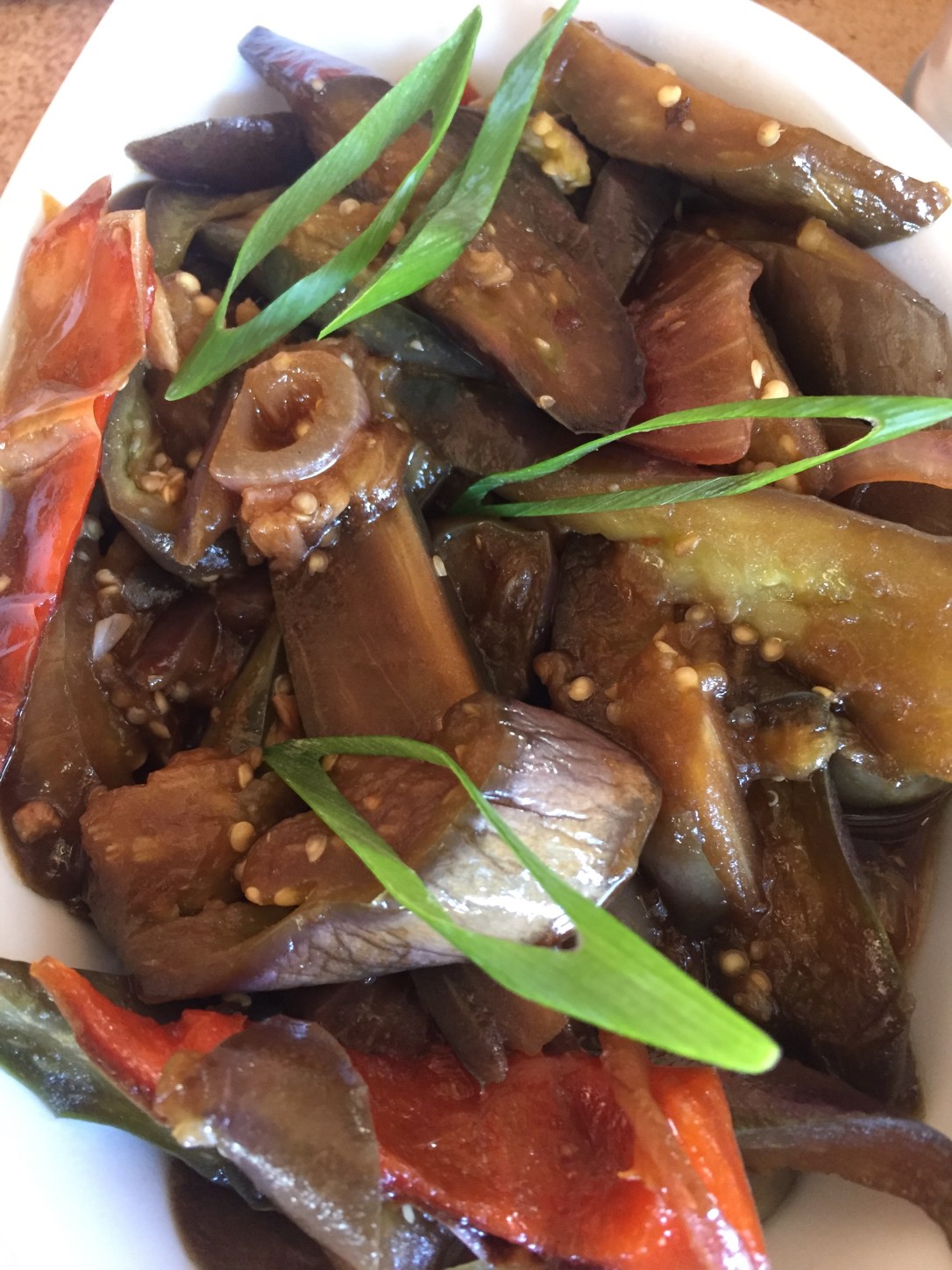
Our expectations for Moalboal are, for now, focused on two things: a hot shower, and laundry. Oh and first: lunch. By the time we arrive we’ve travelled for around 6h. We had bought some delicious banana cake as snacks (we’ve discovered that Filipinos are excellent bakers), but now we are starving and sit down in the hotel’s restaurant as soon as we are checked in. Here we find a surprise: finally a vegetarian version of the Filipino national dish: eggplant adobo. We order two and it is super tasty.
With our bellies filled, we are ready to explore our surroundings. Panagsama Beach is not really a beach in the sense that you can lay down on endless strips of white sand. At high tide, there is no sand whatsoever. You can, however, swim, snorkel, and even dive straight from the shore.

Maybe our favourite spot in Moalboal was a little kiosk with a few tables. They have some bamboo mats and large cushions, which you can grab whether you consume anything or not. Quite nice, isn’t it? From here, you can enjoy the shadow in the morning and the sun in the afternoon, and you can have anything from breakfast to dinner, from iced coffee to beer. We spent many enjoyable hours here.
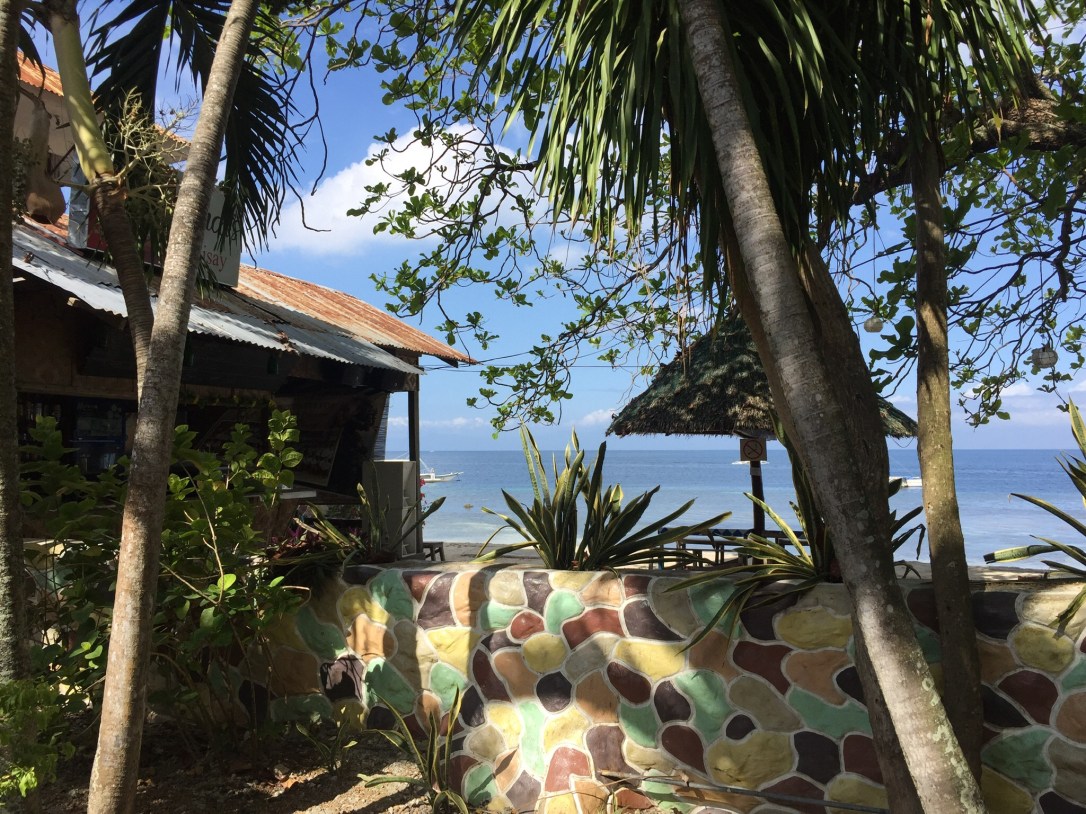
Further on, Panagsama Beach is a mix of restaurants, bars, hostels, dive shops, sari-saris, and a couple of spas. Sure, it’s touristy, but at least during the time we were there, it was not too busy, and we also enjoyed a bit of action after the quietness of the last week.
Moalboal is a famous diving spot, and it is mostly known for its sardine run. Thousands of sardines are swimming close to the reef to feed. The “reef” in itself is quite impressive, you can basically walk there and then whoops, it drops to 60 metres. For divers, this is amazing, as you don’t even need a boat to start your dive. We spotted the sardines already while snorkelling (also met a couple of turtles again), but decided that this would be a nice place to dive – and for Julia this would be her first dive ever. We sign up for a “Discover Scuba Diving” for Julia and a Fun Dive for Brice. For Julia, this means back to school (well, for like half an hour) to familiarise herself with the basics of scubadiving, before getting a more in-depth introduction by the dive instructor. This new knowledge is then practiced a litte bit in the water, and off we go – Julia with the dive instructor, and Brice with an aspiring dive master.
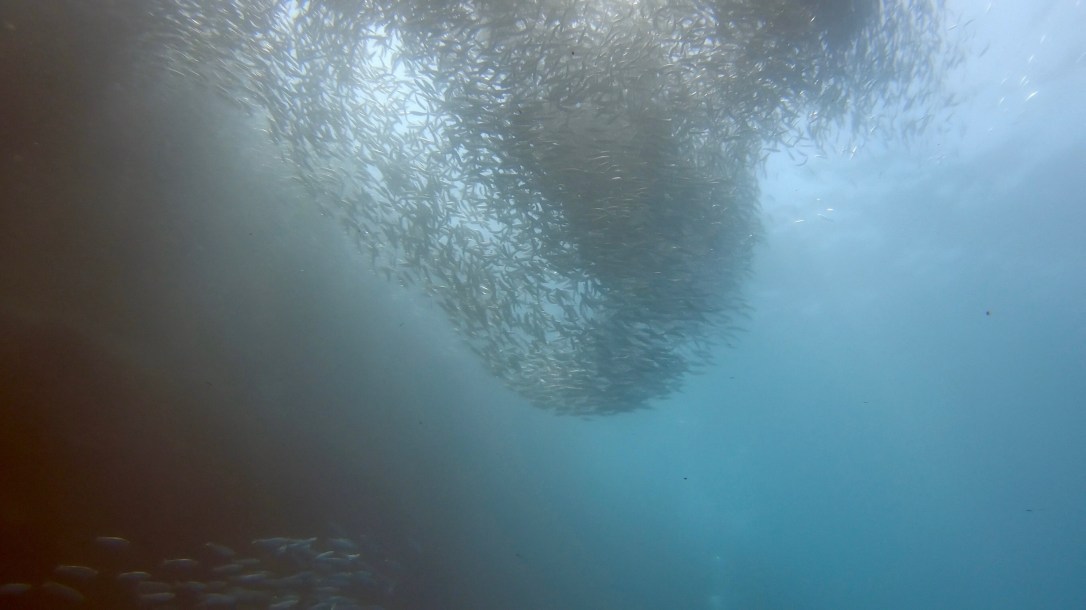
We swim in between the sardines, and the dive instructor shows what else is going on in the reef: lionfish, flutemouth, nudiebranches, yellow striped mackerel… this reef is busy! After about 40 minutes and 9m of depth, Julia proudly holds her certificate. To be seen whether this is going to become a more regular hobby!
Brice is intrigued by another activity that is very popular in Moalboal: freediving. The difference with scubadiving is, of course, that there is no oxygen tank. The challenge, therefore, is to learn how to hold your breath. Breathing exercises, similar to yogi breathing, preceed the diving. The advantage of freediving is that you are less “bulky” and make no bubbles, so it is less intrusive in what’s going on around you. The disadvantage, depending on your point of view, is that your dives are shorter. While Brice is learning some yogi breathing, Julia is off to do more or less the same – a yoga class by the water. Yoga classes are not so frequent in the Philippines (yet), so whenever Julia sees a flyer somewhere, she tries to check out the classes.
We enjoyed Moalboal much more than we expected. Maybe it was also because we were happy to have access to hot water and electricity, but the crazy blue water, the amazing marine life just off the shore, and the all over mellow vibes are here no matter where you were before!
With Moalboal, we arrive at the end of our trip to the Visayas. Next on the agenda: Palawan. We spend one night in Cebu City before going to the airport, and it confirms a bit our expectations: it’s loud and busy and not particularly charming.
But no need to worry: Palawan, here we come!
Activities
Snorkelling
You can snorkel around the sardines simply from the beach (there’s of course not just sardines – we also saw a few turtles, among other things!). You can rent snorkel gear from many shops and hotels, if you don’t have one. We didn’t pay attention to it, but probably tour operators offer snorkelling trips to destinations further afield.
Scuba Diving/Freediving
We did our scubadives with Neptune Dive Center, and we would definitely recommend them. Julia’s instructor made her feel very safe and comfortable. We checked out a few different shops and prices are fairly similar. The “Discover Scuba Diving” cost 60€, the Fun Dive 23€ (note that it gets more expensive if you go with a boat).
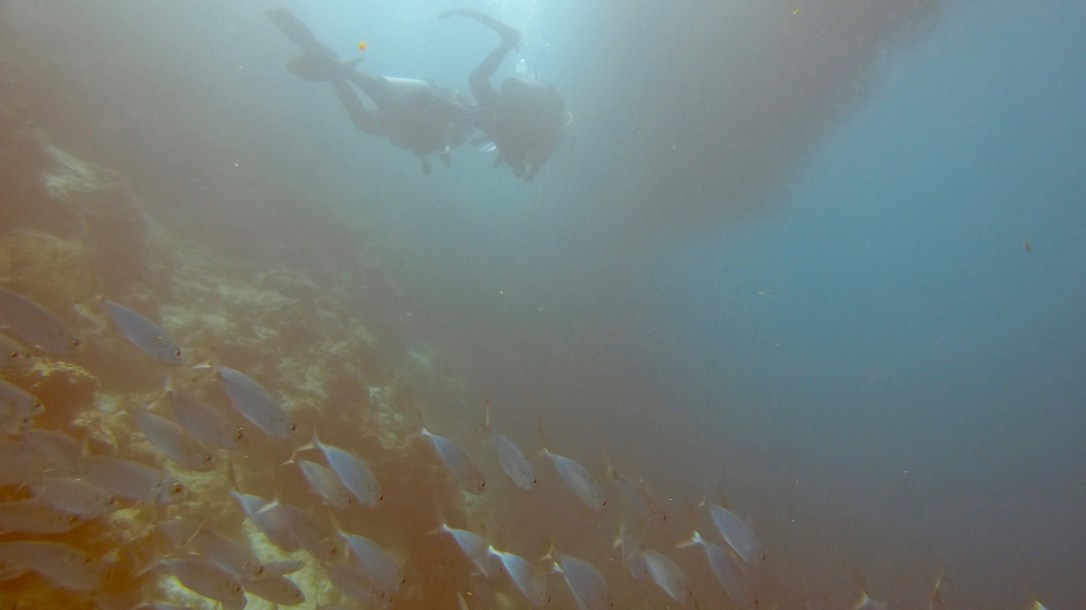
For freediving, Brice went to Freediving Planet and he would also recommend them. The introduction to Freediving cost 53€. Just like for scuba diving, you can do courses to reach different levels.
Yoga
Melanie has morning and sunset classes next to the Quo Vadis resort. She is in Moalboal from October to May. 7€/hour, about 1.50€ are invested in her association that is creating a dog shelter in Moalboal. You can contact her via Instagram.
White Beach
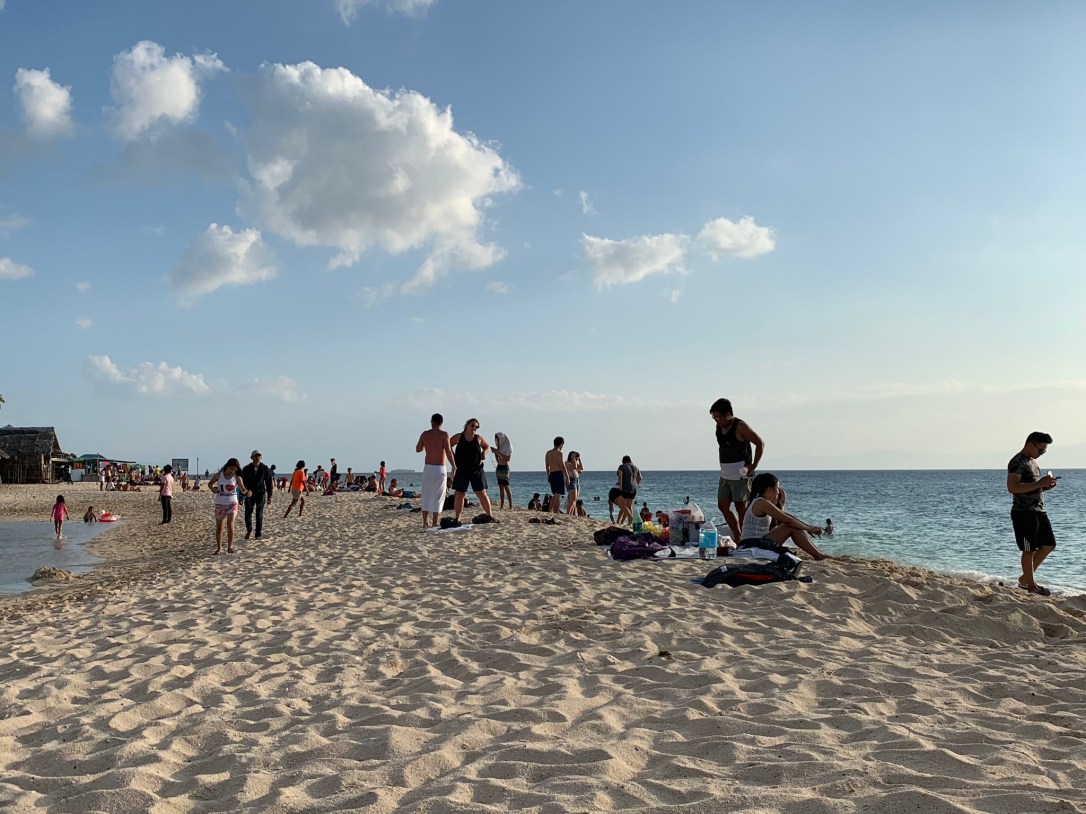
White Beach is a few kilometres north of Panagsama Beach and it is much more “beachy” with a nice stretch of white sand. The tricycle costs around 2.5€, entrance fee is less than 10 cents/person. There is basically no shadow, so make sure to protect yourself accordingly, or come after 15h, when the heat starts to get a bit more bearable. There is a restaurant/kiosk. We enjoyed this beach but preferred to spend time in Panagsama. There are also hotels close to White Beach if you prefer a bit less action.
Food
The Last Filling Station
This is the hotel restaurant of Tipolo Resort. The first thing we ate in Moalboal was their Eggplant Adobo and it is really delicious. Prices in Moalboal are generally a bit higher than in the places where we were before. However, the breakfast here is really overpriced for what it is (4€ for an American breakfast) – in most other places it costs about half.
Andy’s Talisay
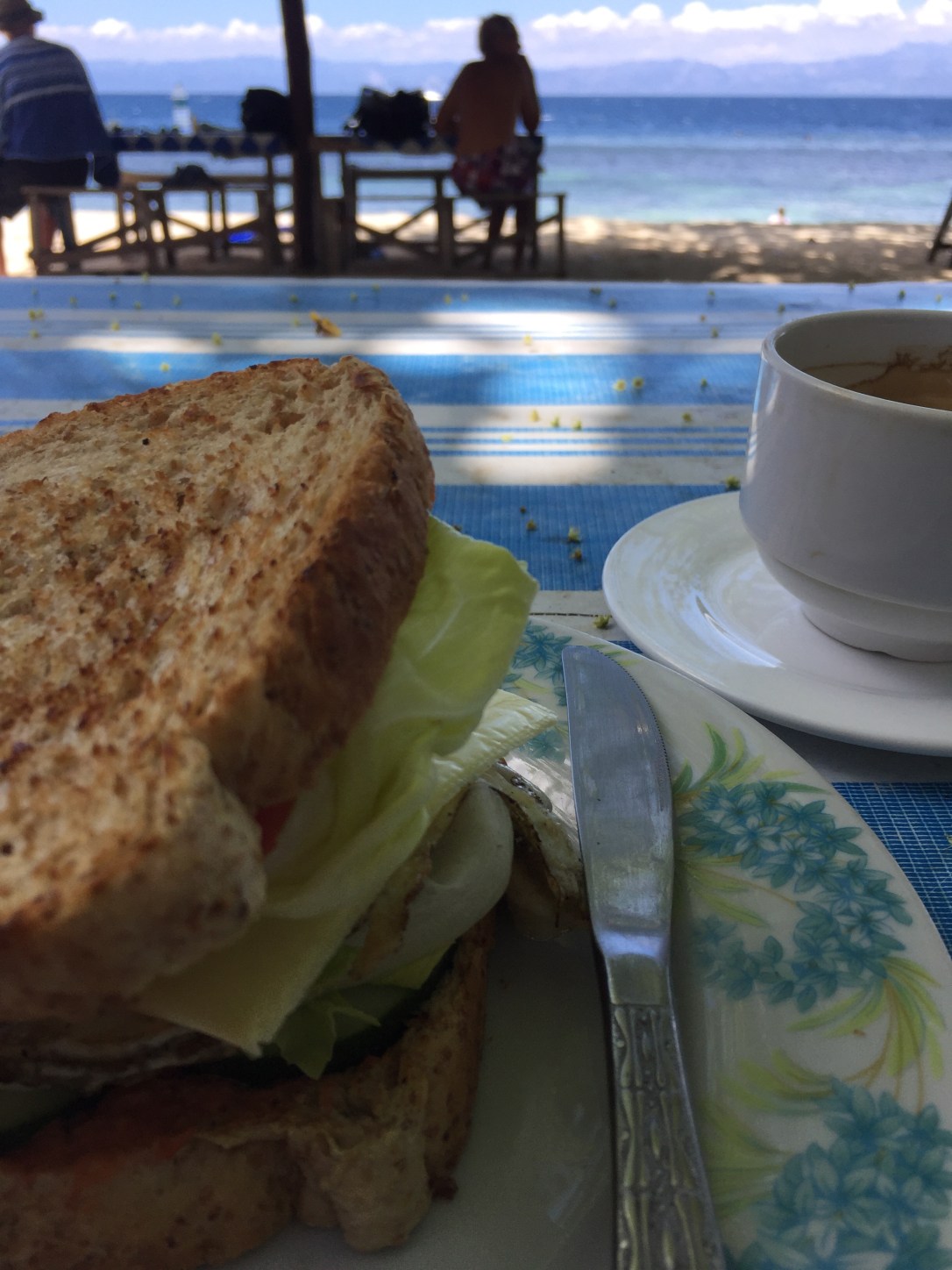
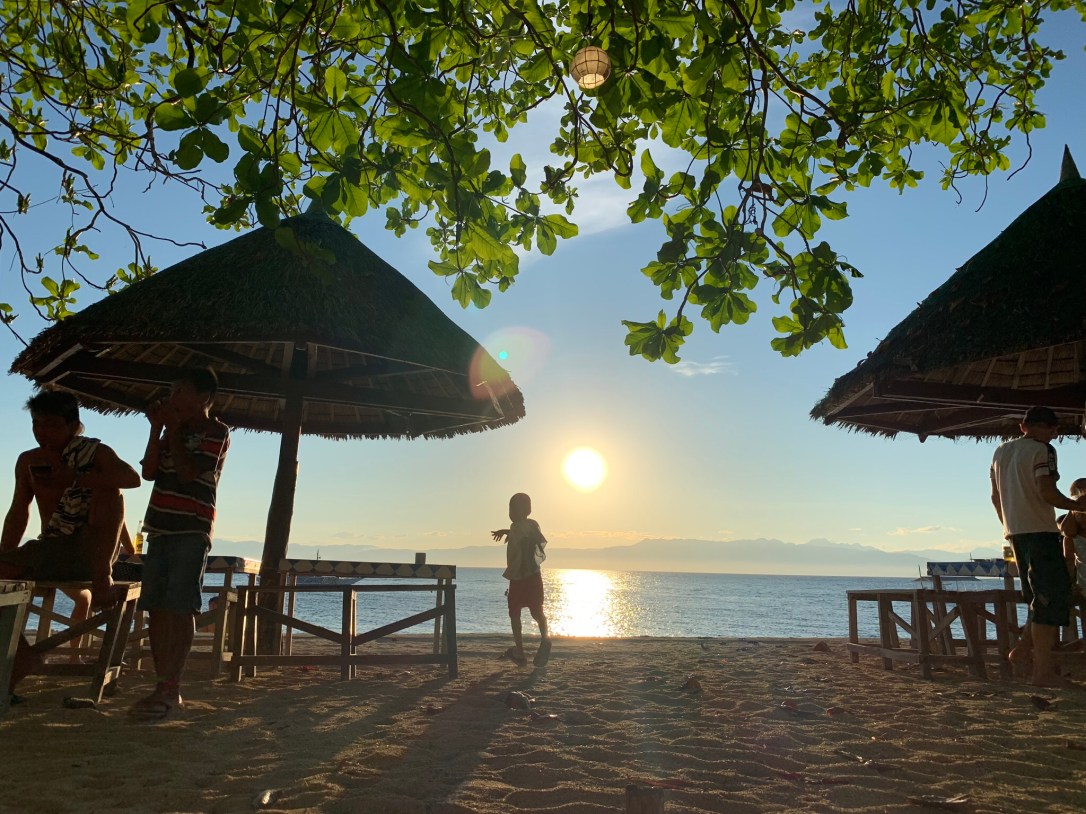
The kiosk we rave about above! They have drinks, coffee, burgers, and sandwiches. Most things cost between 1 and 3€. They are open from around 9 until 21h or so. Great place to watch the sunset!
Lantaw
To be honest, many restaurants in Moalboal seem a little exchangeable. They all serve a mix of Filipino, Asian, and Western cuisine (why does everyone offer pizza? It’s a really big deal. Do people come to the Philippines to eat pizza?). Lantaw has Thai, Indonesian, Indian and Filipino cuisine, as well as some pasta dishes (at least no pizza). Food is good, not too pricy, and the staff is very kind. The first time we went, they even told us that it would be a bit of a wait for the food and if we were ok with it. We had pasta here and it was nice, so that was quite comforting for two pasta addicts like us. They also have good breakfast.
Makan
Towards the end of the main road (coming from the beach) there are a few Filipino style restaurants, that also seem exchangeable. They showcase their catch of the day and also offer meat and vegetarian dishes. We had a nice dinner at Makan (with fresh coconuts!), and also a really good Filipino breakfast (this usually consists of rice, eggs, and some kind of meat or sausage, for Julia they replaced the meat with half a mango).
Silver Ray Restaurant
This one is a bit harder to find because it’s upstairs (the entrance is to the left of “The Pleasure Principle”). It caught our eye because the menu, that you can check out on the street, had a whole page of vegetarian options. They have a nice, breezy restaurant – unfortunately the day we came a large group had taken the best seats by the window. We discovered Pancit Behon, one of the Filipino noodle dishes, in this case with rice noodles. One of our favourite Filipino dishes now! They have huge portions (at least for the pancit), both of us were unable to finish them (unusual in the Philippines), so consider sharing.
Where to stay
We stayed in the Solar Lodge, a sister hotel to Tipolo Resort, and paid around 22€/night. The building is new, the rooms are more functional than charming, but the beds are comfortable, the hot shower works, and the a/c is great, even if slightly noisy. There are some tables on the first floor so you can sit outside, and inside on the ground floor (where the wifi works best). The location is great: two minutes walk to the water, restaurants within a stonethrow, but also only 5 minutes to the main street of Panagsama Beach. The housekeeper is amazingly friendly and helpful.Would definitely stay here again. If your budget allows, Tipolo Resort could be nice, as it has a seaview. Just avoid the restaurant (The Last Filling Station, see above) for breakfast.
Getting here
Coming from Apo Island, this was a bit of a trek for us: half an hour boat ride (5€/person) to Malatapay, 45 min tricycle (10€/tricycle) to Sibulan Port, 15 minutes ferry ride (about 1€) to Liloan, 10 min tricycle ride (3.30€/tricycle) to Bato, two hour bus ride (1.50€/person) to Moalboal town, 10 minutes tricycle ride (3.30€/tricycle) to Panagsama Beach. If you fly into Cebu, you can take the bus from Cebu South Bus Terminal to Moalboal town (minimum 3h, 2.50€/person) and then take the tricycle to your accomodation. You can also hire a private car, 40-50€. From Dumaguete, you need to take a tricycle to Sibulan Port, and then take the ferry etc, as above.

 lookingforcoconuts