
Crossing the border from Laos into Cambodia is not difficult, you just need to be alert for scams. One that is difficult to escape is the $2 the Lao border officers charge for the ink for the exit stamp. The other is some guy who shows up and pretends he’s there to help you cross the border. It’s not like he doesn’t help you – but he doesn’t do it for free and you don’t actually need his help. He is smart because he speaks to you as if you’ve been waiting for him all along and if all this was completely normal. He even hands you the little form you have to fill in. But once he asks you to hand him your passport, you know that something is a little fishy. We just tell him that we’re fine on our own and somehow he understands pretty quickly that there’s no business to be made with us. He probably knows – and rightly so – that someone will end up giving in to his convincing looks (he is dressed quite smartly in comparison to pretty much anyone in Laos who is not a hotel employee) and speech. Unfazed, we walk to the Cambodian border control, pay the visa fee (we are honestly a bit surprised that there is no “extra fee” here, after reading so many stories about it), and step into Cambodia! (This was the first border we fully crossed on foot.) We wait for everyone else to cross the border, and shortly after, we are on a minivan direction Siem Reap.
The journey is quite lengthy, but not too uncomfortable. We make a lunch stop, where we change van, and by the time we get to Siem Reap, the sun has already set. A tuk tuk drops us off at the hotel. We are quite excited to get here, as we have picked the place for one reason: it has a fully equipped kitchen. Spoiler alert: we’ll be eating a lot of home cooked pasta in the coming days. For tonight, we just quickly eat at the hotel restaurant and are ready to fall into the beautiful, comfy bed.
It’s not hard to guess why we came to Siem Reap, it’s to see the temples of Angkor, of course. We take one day to acclimate and have a bit of a look around town, before heading to the temples. We’ve decided to explore the vast terrain by bicycle. The most common option to get around Angkor is by tuk tuk. We are not super keen on the idea of depending on a driver the entire day, so we opted for the bike. More or less early the next morning, we are on our way. Our first stop, the ticket office. It is low season and there is no queue. However, the ticket office is still a bit of ride to the entrance, so by the time we arrive at Angkor Wat it is almost 10am, and it is hot! Time for a coconut break. Luckily, coconuts are abundant in the shops around Angkor and they are wonderfully chilled.
We start with the best known temple of Angkor, Angkor Wat.
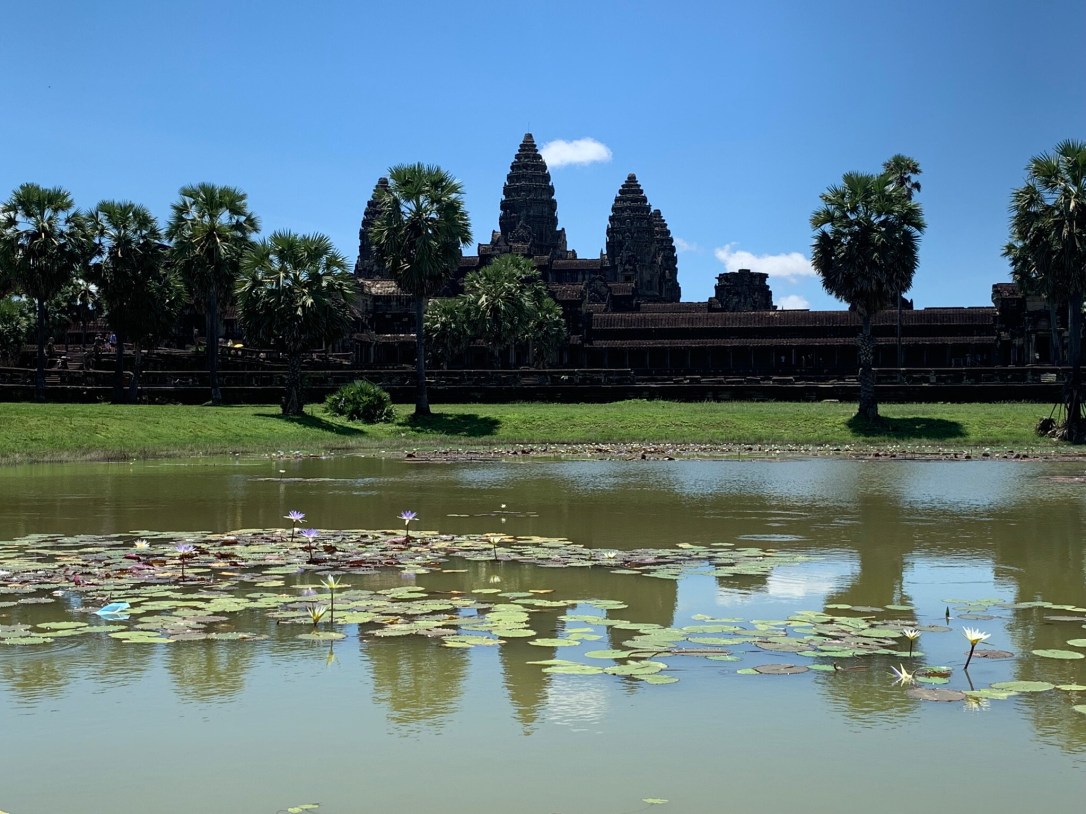
And what can we say much more than is already known? Angkor Wat was not our favourite temple, but there is no discussion that its sheer size is jaw dropping. We spend a good hour exploring the corridors and different floors of Angkor Wat, before heading towards the exit. Back on our bike, the next stop is the Bayon Temple of Angkor Thom. Before continuing our visit, we enjoy our sandwiches in the resting area – and we notice how good the bread is in Cambodia!
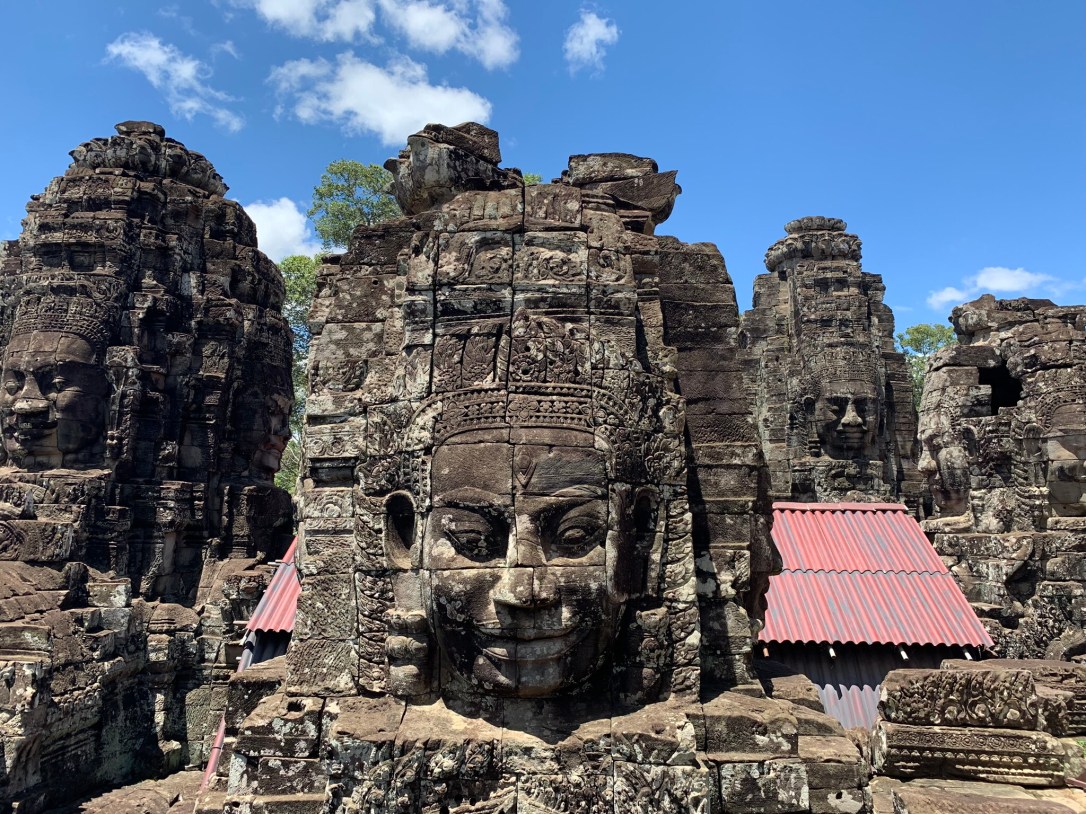
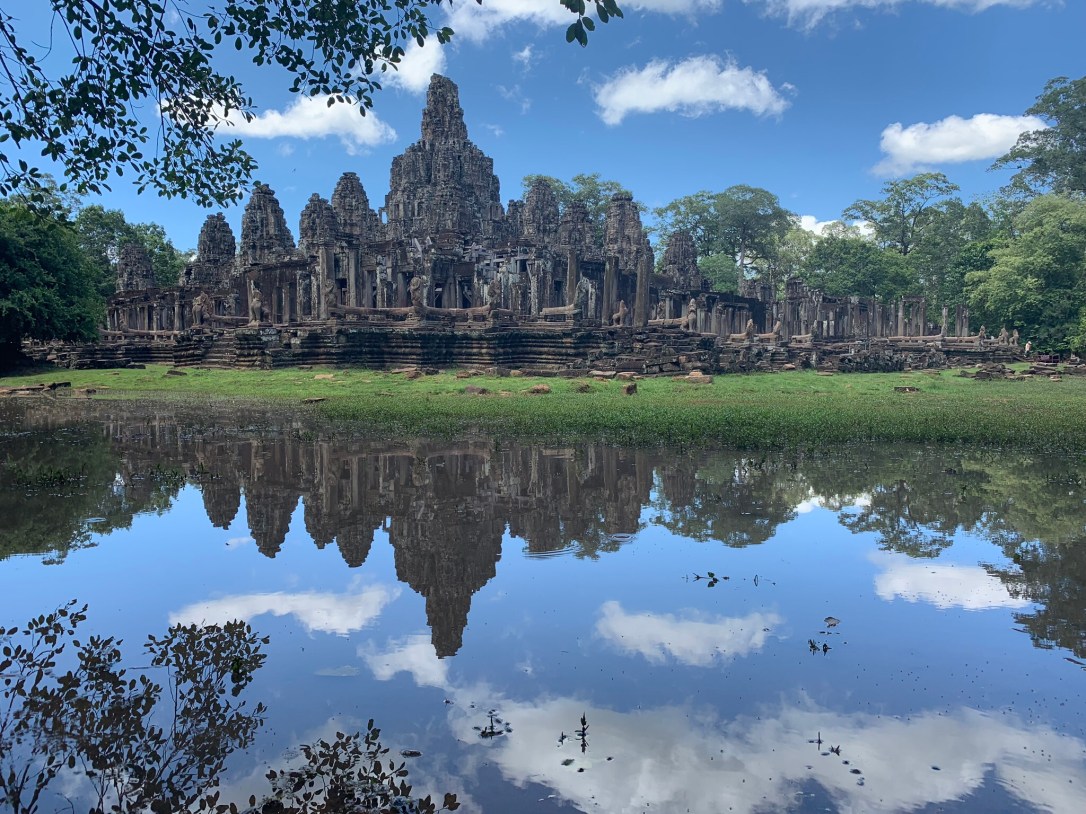
Angkor Thom impresses us even more than Angkor Wat. It’s beautifully decorated with statues and is so well preserved, it is quite incredible. It is around 1pm now and the heat is starting to get to us. We decide to make one last effort and have a look at the terrace of elephants, located just behind Angkor Thom.
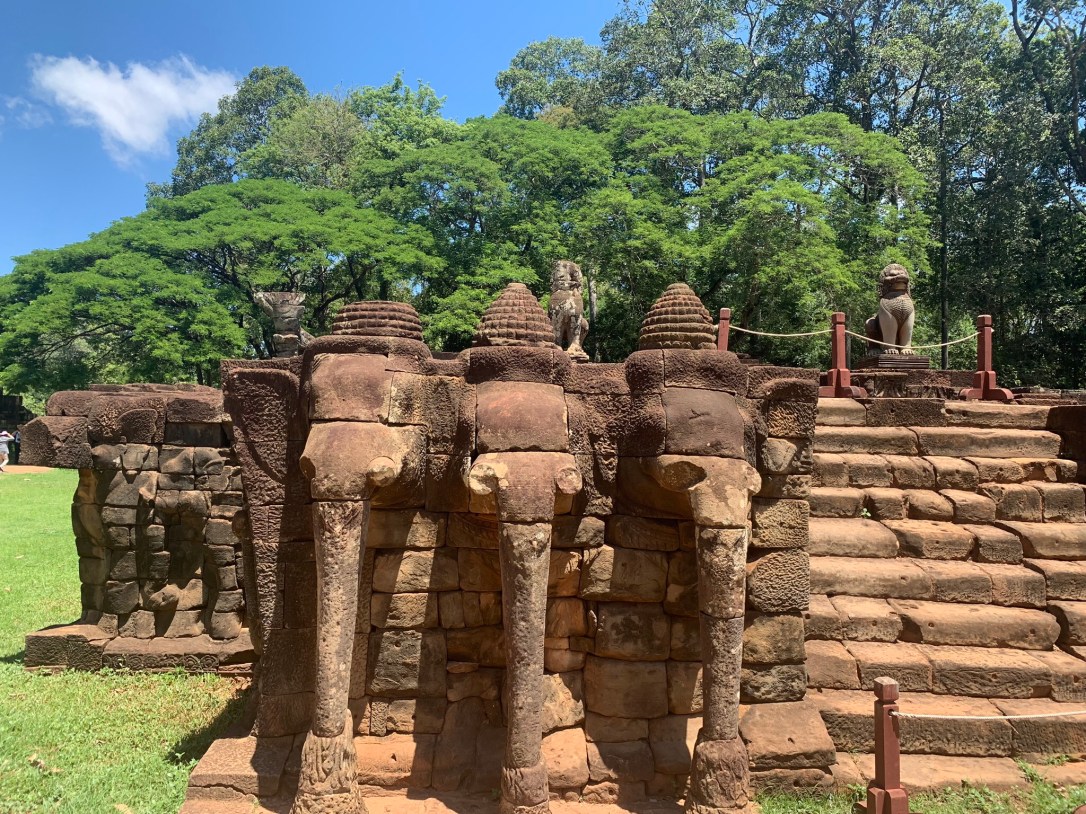
This, and the neighbouring terrace of the Leper King, is a little bit less impressive and less well preserved. Nevertheless , we are starting to get an idea of how huge the area of the Angkor temples is. We’ve only seen a fraction on our first day and we are already exhausted. We summon our last remaining forces and pedal the 8 or so km back to our hotel.
We need to rest and gear up for the next day. One thing generally considered a “must do” in Angkor is watch the sunrise. Now we’re all for watching the sunset, but sunrise means getting up early, and in this case, really early. Yet, we decide that we don’t want to miss it, even if we are quite sceptical. Pictures of crowds don’t really promise a peaceful experience. At 4.30am, we are already on our bikes and the morning air luckily is quite refreshing. After a while, Julia notices that she seems to have to pedal with a lot of force and to sweat a lot despite the flat road and the crisp air. But – no time to waste and she powers through to the temple. It would have been so annoying to have gotten up in the middle of the night and then miss the sunrise! Arrived at Angkor, we confirm, of course, that the back tire is flat. Not the best start to the day, but we made it!
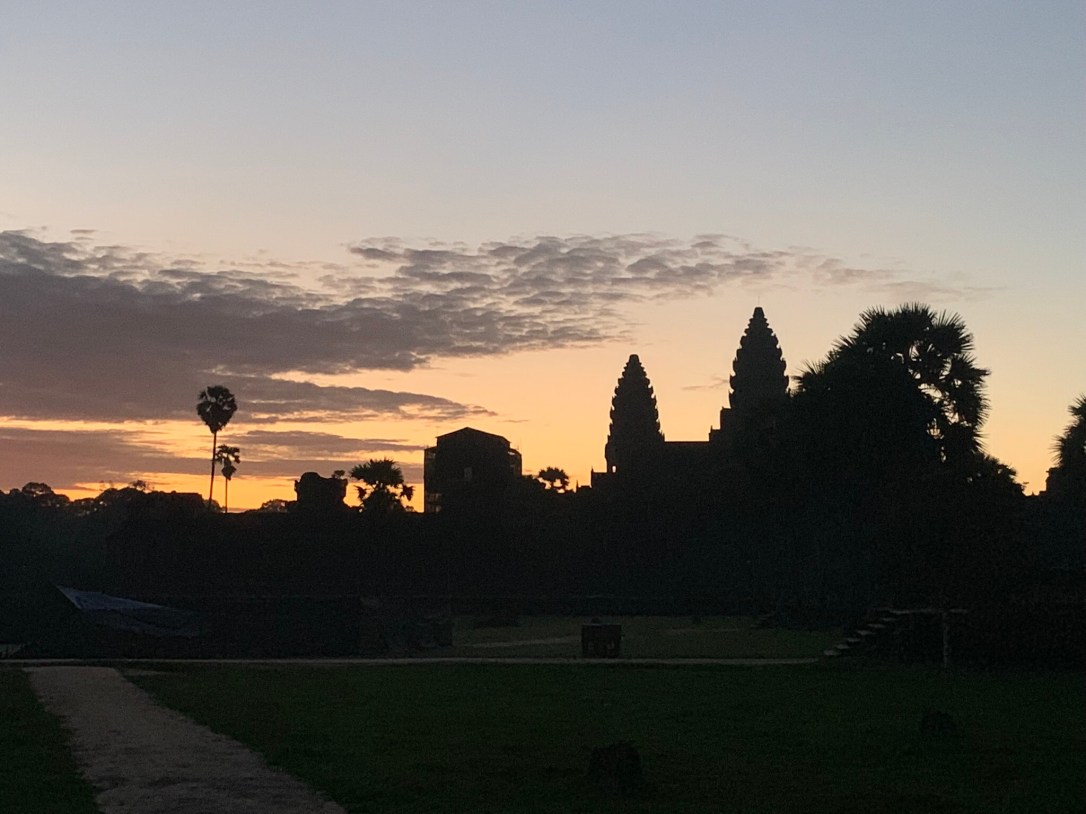
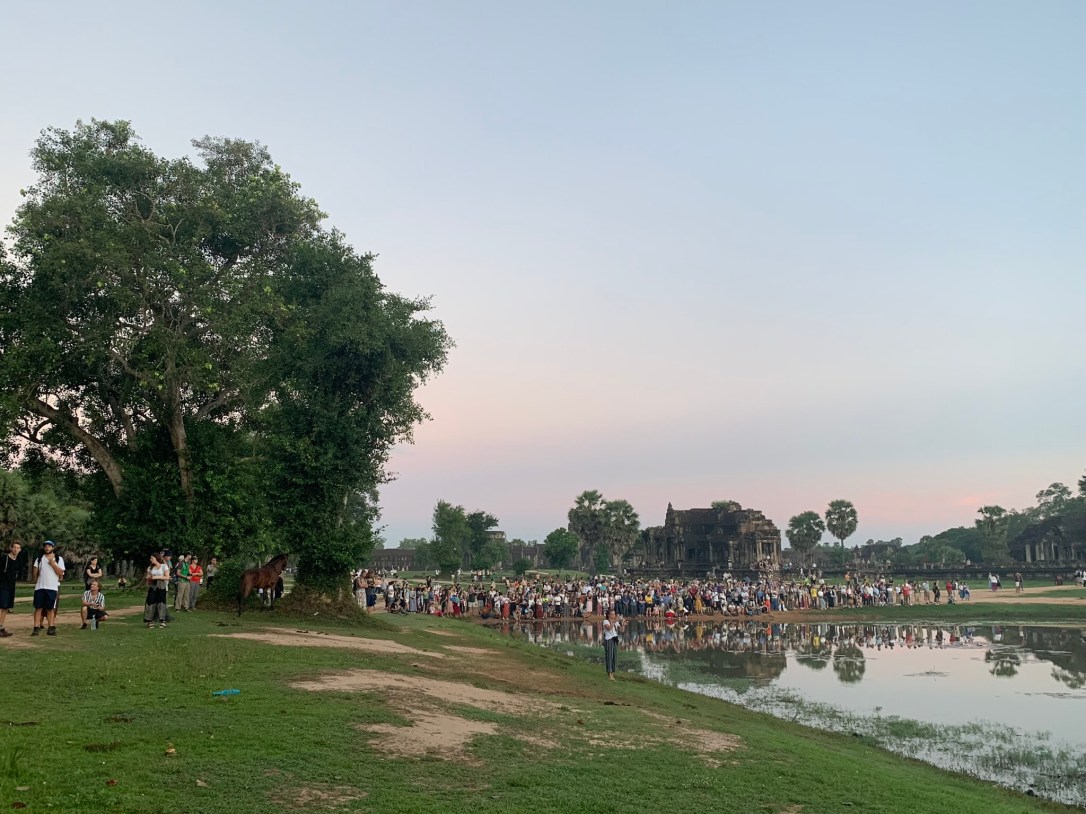
Quite honestly, for us the sunrise wasn’t really worth the hassle. We didn’t regret coming, but we weren’t in awe. Maybe it was just that particular day? Or maybe we just aren’t sunrise people? And despite being in low season, there were just too many people.
After we’ve sufficiently admired the sunrise, we have a well deserved breakfast before enquiring if there is someone around to save our flat tire. We are in luck, just behind the parking lot, there is a station that caters mostly to motorbikes, but the guy fixes the tire for a few cents. We are headed east and north east of Angkor Wat today. Our first stop: Banteay Kdei. Angkor Wat and Angkor Thom have pretty well groomed surroundings, but Banteay Kdei had the jungle take over.
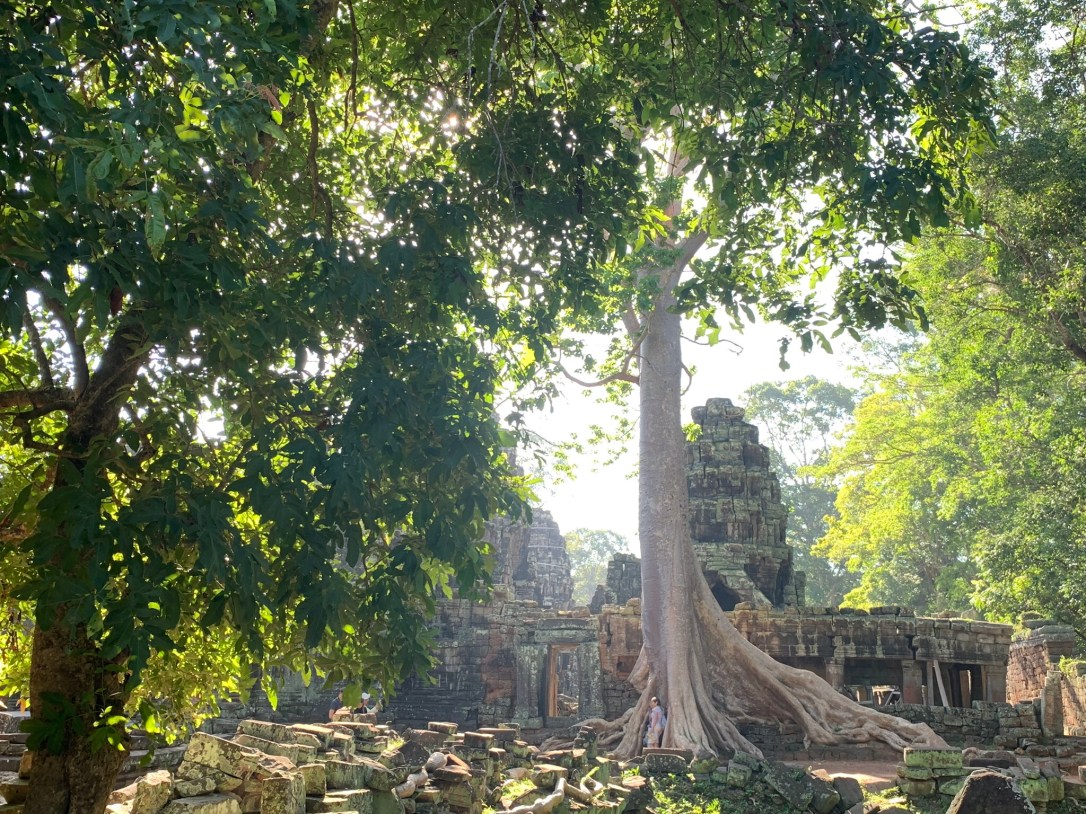
How cool is that? With trees and plants invading the temple walls, the atmosphere is quite different from the temples we saw on our first day.
Next stop: Ta Prohm. This temple is one of the most famous, as it is the location for some scenes in Tomb Raider (please don’t ask us which; half of us have never seen the film(s), and for the other half it was a long time ago). Similar to Banteay Kdei, the jungle is taking over the walls here, but some of the building structure is still in very good shape.
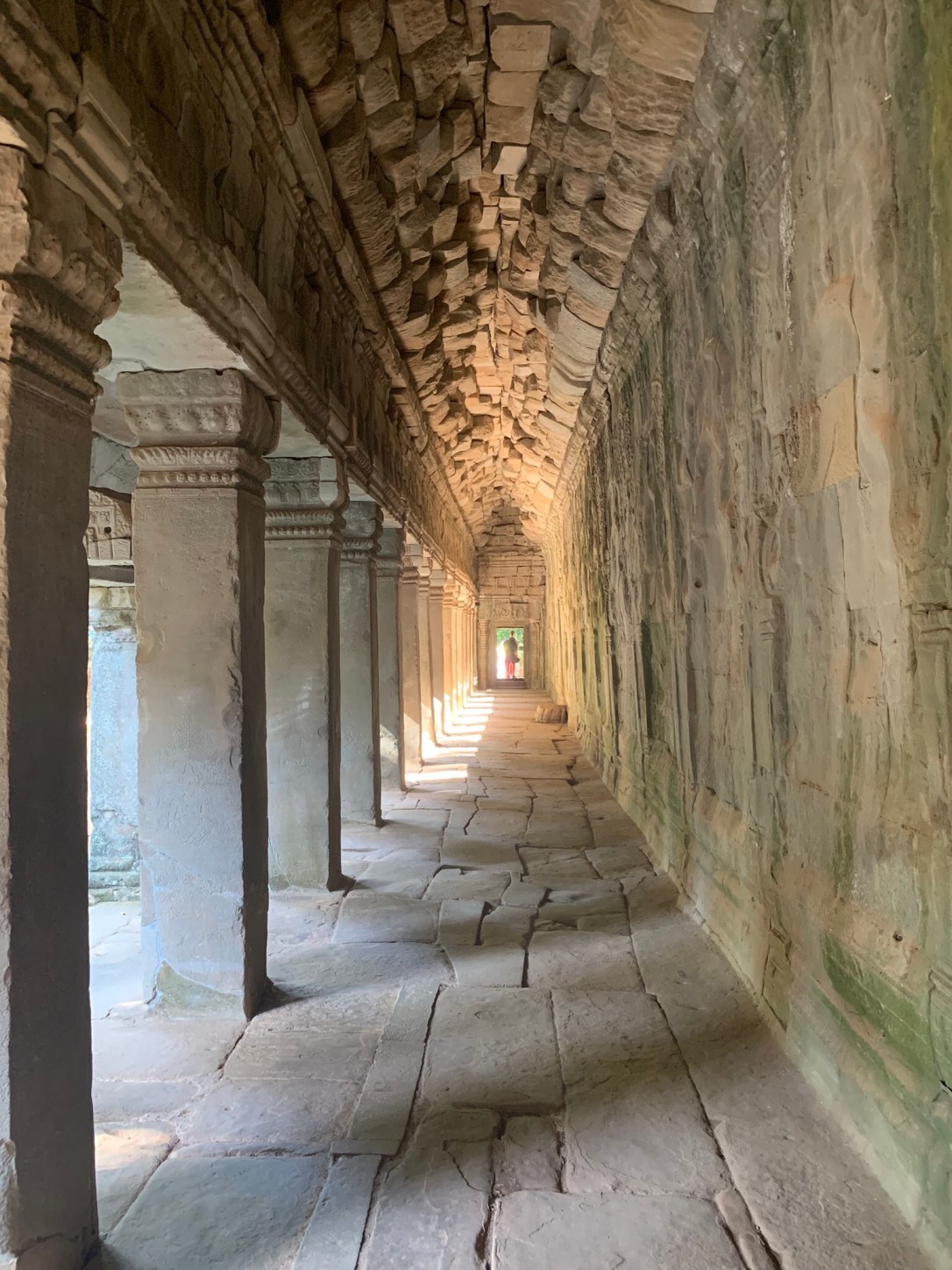
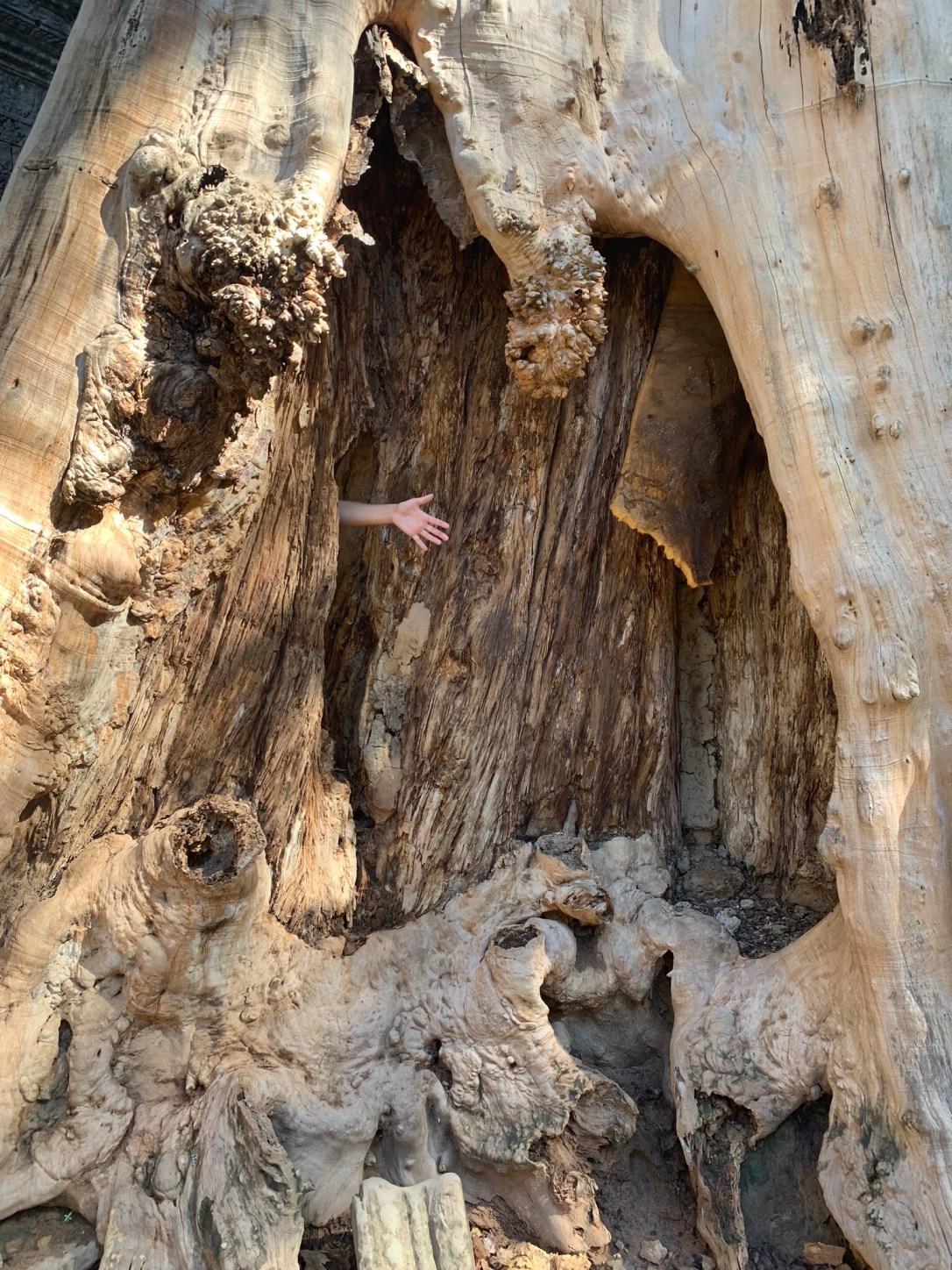
After Ta Prohm, we enjoy a cold coconut before heading to our next destination: Ta Keo. Compared to the temples we’ve already seen, this one impresses us a little less. It is well preserved, and you can climb up pretty high and enjoy the view. Well, the view around here is generally quite limited due to the thick jungle cover.

On the way to Ta Keo, we had noticed a turn towards the Ta Nei temple and after we googled it, we decide to bike back there. Not only is this one of the least visited temples, but you also have a chance to see black Gibbons. Unfortunately, we aren’t that lucky but the temple is still amazing. It is almost completely in ruins and you have to climb over many stones to get around. There are no other visitors, it is so peaceful here.

We are all templed out for the day and decide to take the scenic route past Angkor Thom and Angkor Wat back towards the city. We also need one more coconut for the way home. It’s only about 1pm when we get back to the hotel, but given that we’ve been up since 4, it feels like late afternoon. One bowl of pasta later, we are snoozing away.
We have a three day ticket to Angkor, and we plan to fully exploit it. On our third day, however, we decided to leave the bikes behind and take a tuk tuk for sunset. Our driver is the one who took us to our hotel the first day, and whom we promised to contact in case we needed a tuk tuk for Angkor. We requested the following stops: Preah Khan, Banteay Brei, Jayatataka, and Pre Rup, which is the hotspot for sunset. For this last day, we get to experience how it is not to arrive all sweaty at a temple and to wear flip flops. Yay!
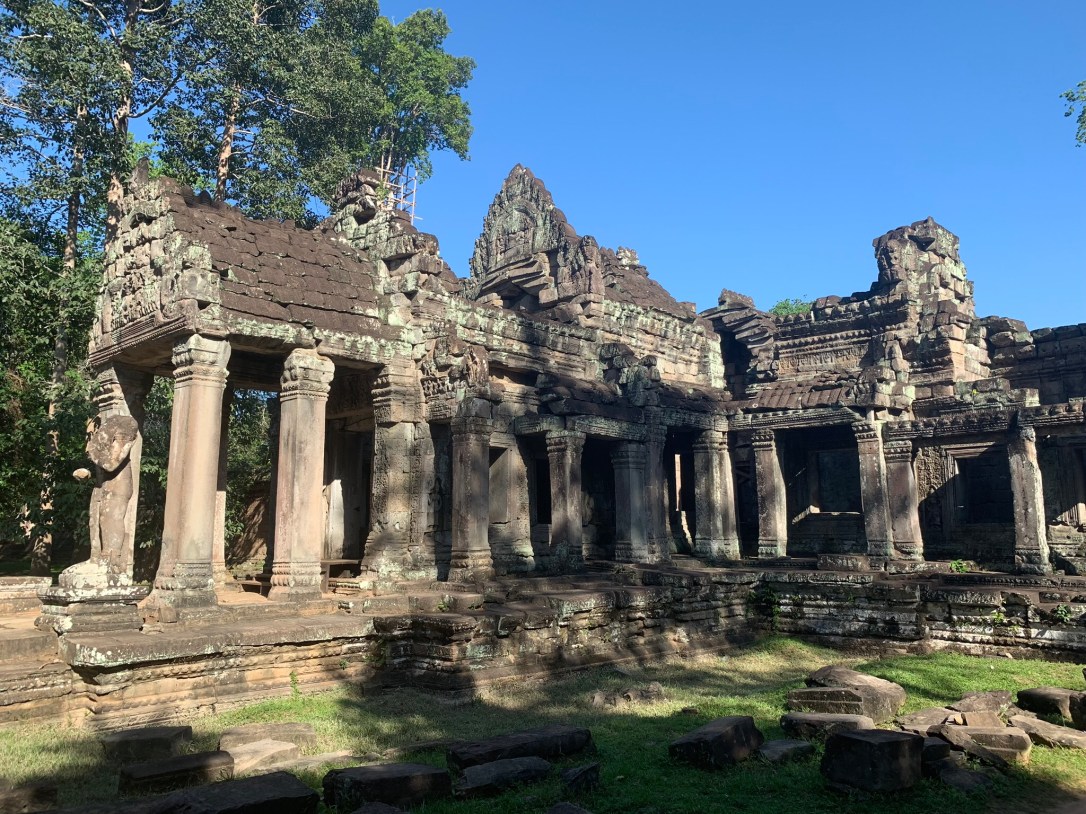
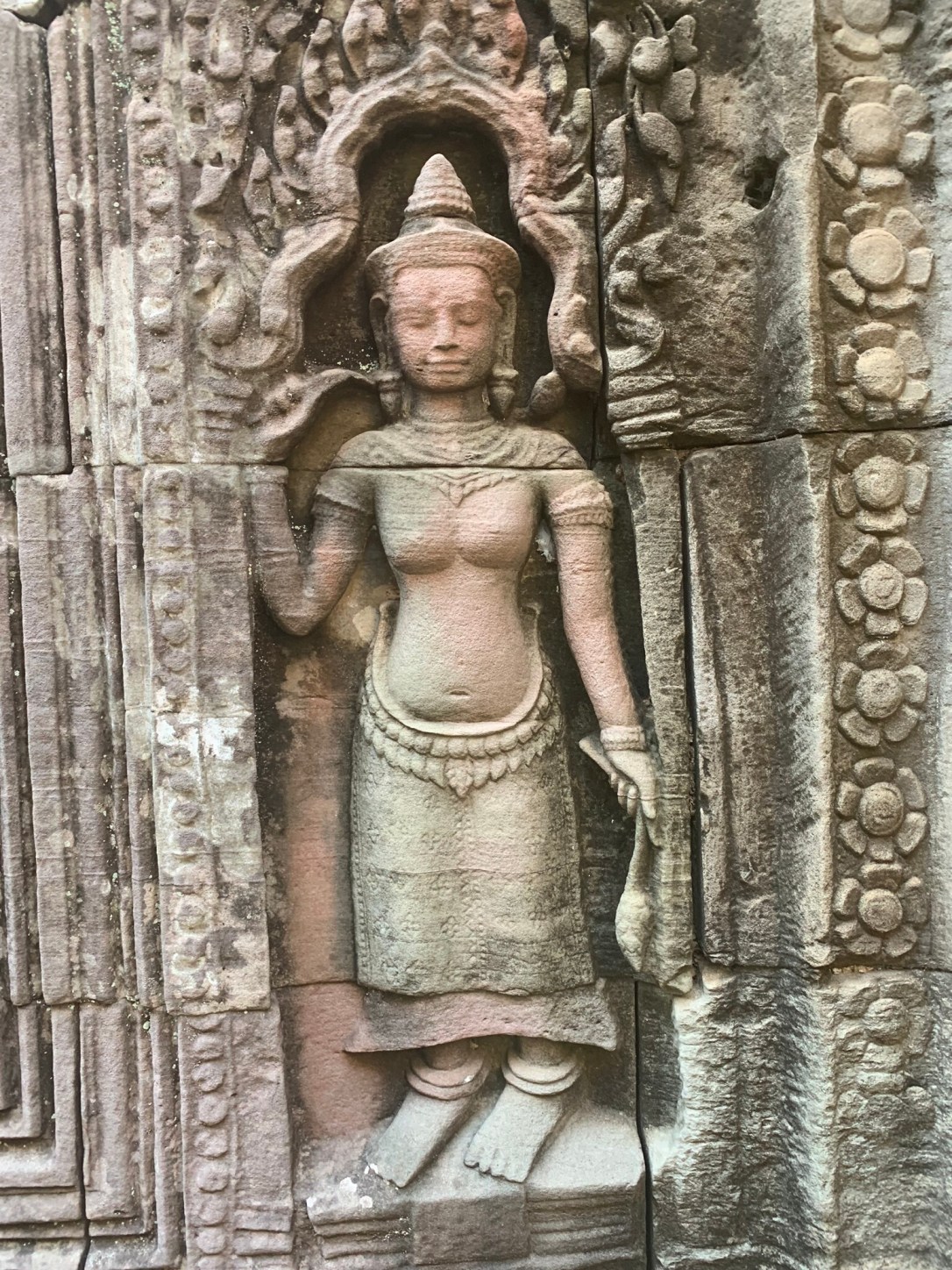
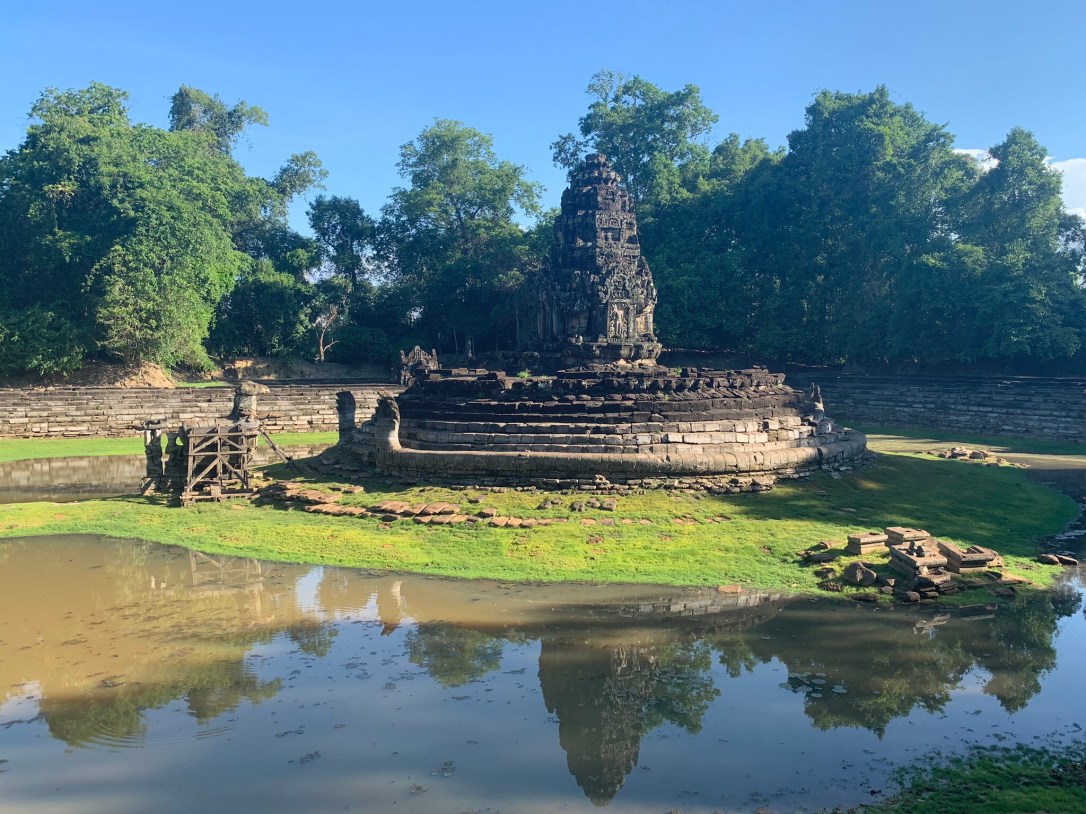
After Jayatataka, it is still a bit early for sunset and our driver stops at East Baray. It is 5 minutes to closing time, but the guard lets us in for a quick visit. We are quite surprised by this temple, as it is different from the others we had seen. It’s beautiful and we try to stretch the 5 minutes but the guard won’t have it.
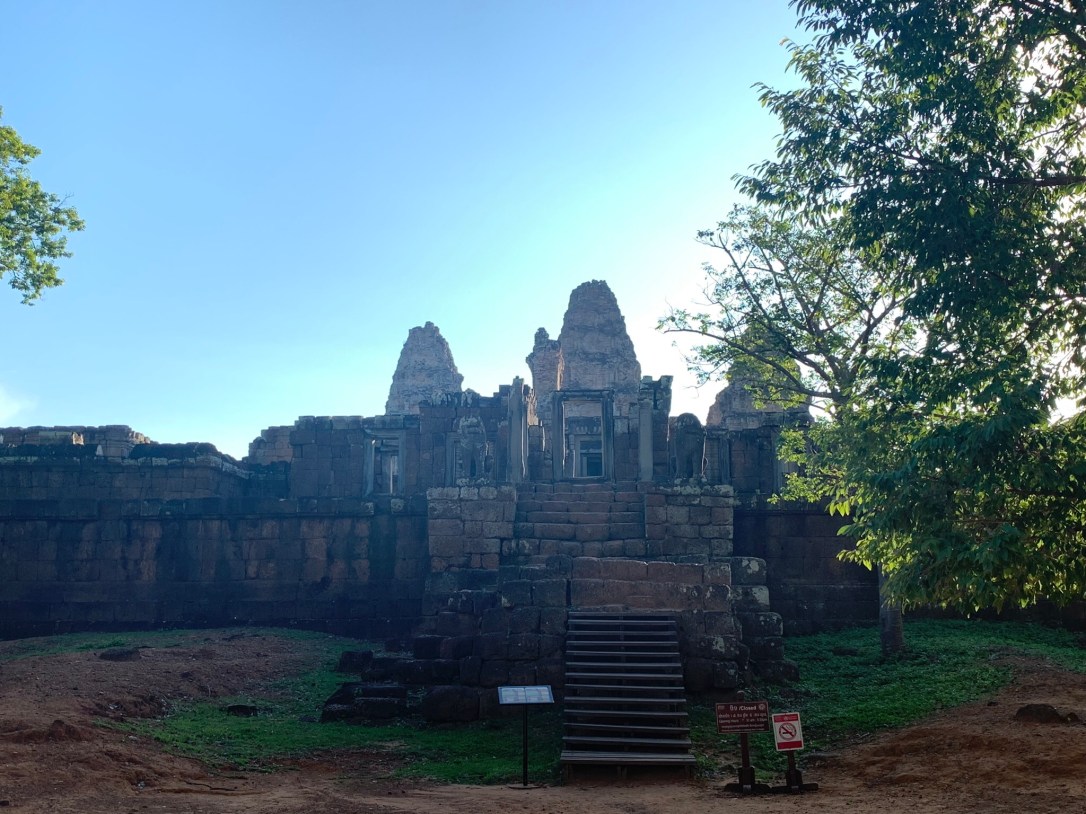
We are off to our final stop in Angkor. While sunrise is happening at Angkor Wat, sunset watchers head to Angkor Thom – with quite limited space, apparently – or to Pre Rup. It’s still a bit early, so by the time we climb Pre Rup, we have to wait another 45 minutes (though, as we should find out later, sunsets are easier to wait for than sunrises). Pre Rup is similar in style to East Baray and the sun is setting over a seemingly endless jungle. It is quite busy, but probably it’s hard to find yourself alone in Angkor at a sublime sunset spot. Many people leave as soon as the sun has disappeared and before the sky starts to shine in all sorts of fiery red colours.
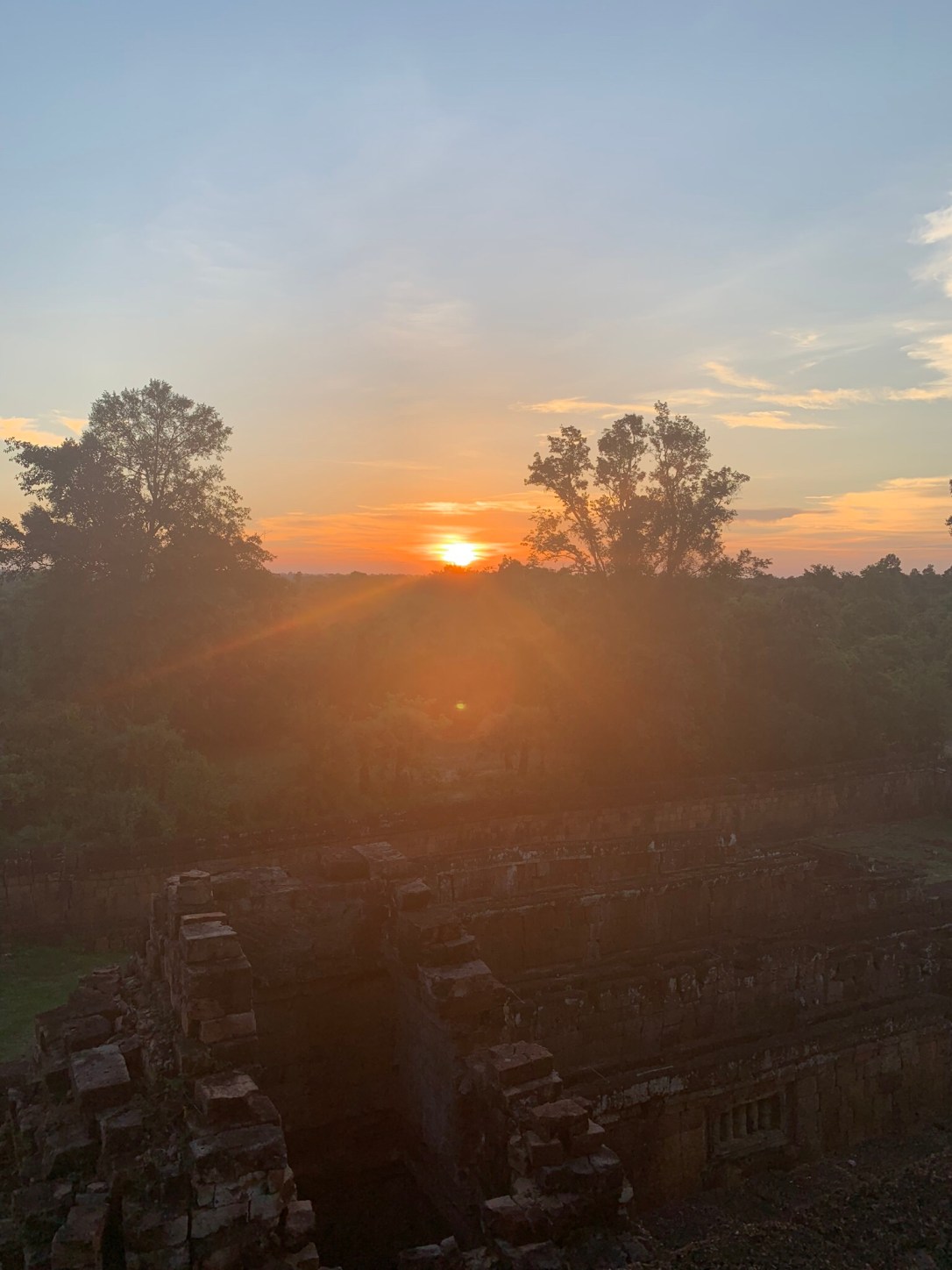
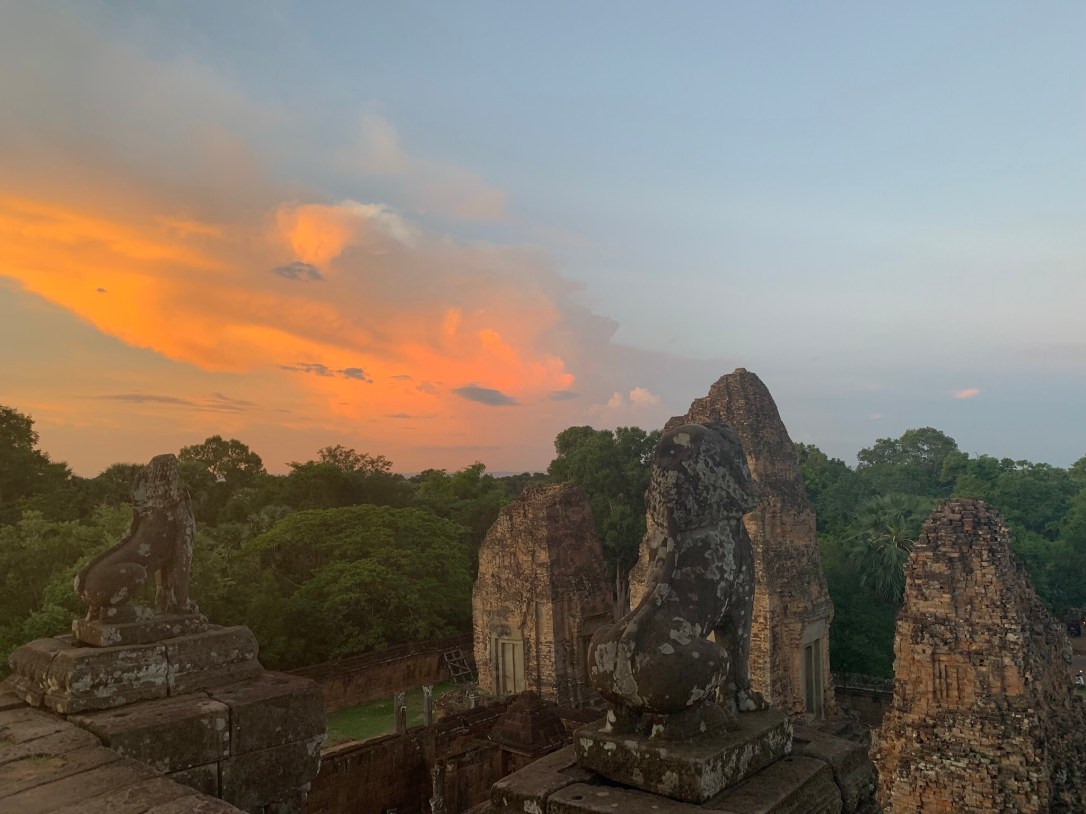
As the guard starts to ask the last people to leave, we sneak in a few more pictures, and climb down. Very satisfied with our visit, we are ready to leave the temples of Angkor for good (at least for this visit in Cambodia).
Practicalities for visiting the Temples of Angkor
The Temples of Angkor are located just north of the centre of Siem Reap. The town itself is not all that exciting. There is a very touristy part with a lot of shops and restaurants, which is fine for an evening or so, but not more. Venture in any direction from there and you’ll see that there isn’t really any investment in infrastructure and the tourist streams seem to be growing bigger while the situation of the locals doesn’t seem to change proportionally to the economic growth that should come with the tourists. Hopefully the money doesn’t only go into new luxury hotel complexes.
Tickets
Tickets are only available at the official ticket counter. Your picture will be printed on them. A one day pass costs $37, three days $62 (to be used within 10 days), 7 days $72 (to be used within 30 days). You don’t have to use your 3 and 7 day pass on consecutive days. We would definitely recommend taking at least 2 days to visit, and if you can, buy the ticket the day before (especially if you have only one day or if you want to watch the sunrise on your first day of visit). Some hotels offer a free shuttle to the ticket office in the evening and you can watch the sunset without having your ticket checked (after 5pm).
Getting there and getting around
Best is to figure out your transport before you get to Angkor, as otherwise it will get expensive – and you won’t be able to rent bikes at the temples. Do not think you can walk between the temples. It’s 3km just to get from Angkor Wat to Angkor Thom. Tuk tuks generally offer the big or small tour of Angkor, though if you have specific temples in mind you can negotiate that, too. There are stories of drivers “disappearing” during the tour, so definitely don’t pay them in advance. If you haven’t met a driver you like (for example, who picked you up from the bus stop like ours), we would recommend you find a driver with your hotel and agree on the prices, route and duration with them. The small circuit costs around $15, the big $20. This includes picking you up from and taking you back to your hotel. Note that drivers aren’t necessarily guides, even if they may know a lot. If you want a guide, make sure to get an official one.
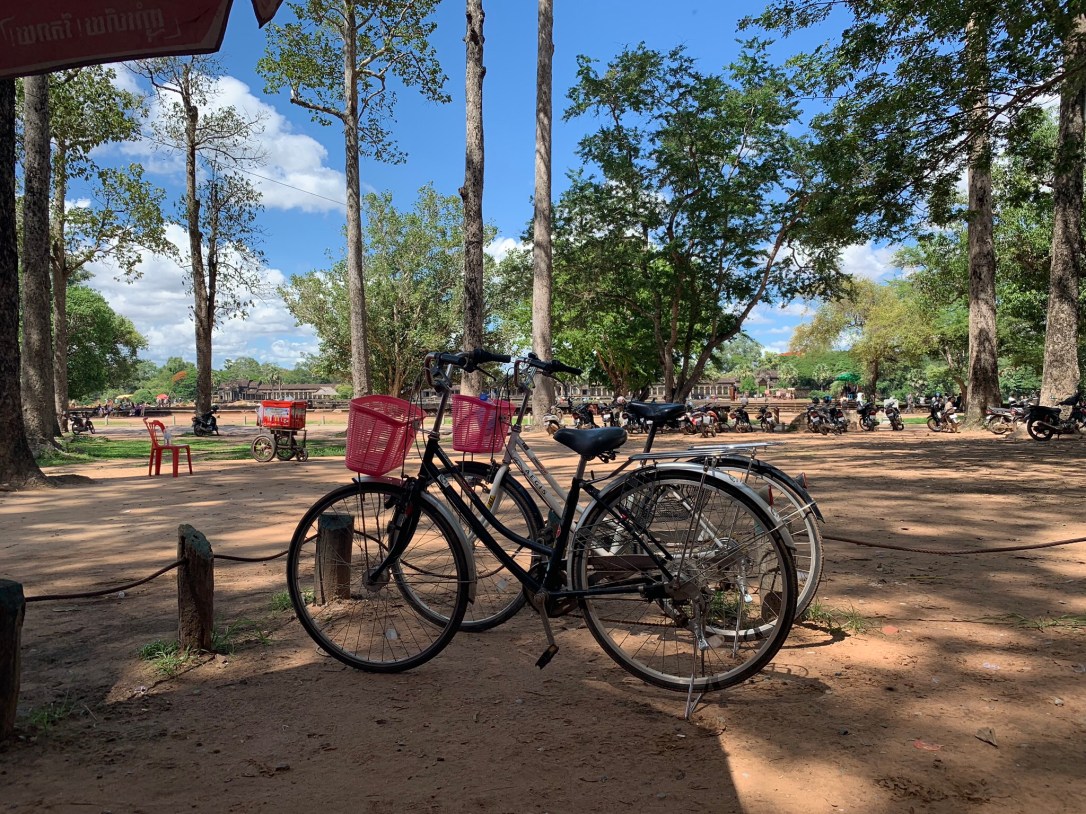
Your second option is going by bike. This is more exhausting, but we thought it was more fun! However, if you only have one day, we’d rather recommend the tuk tuk, as you will most likely be able to see more unless you are super fit. Your hotel will be able to provide you with a bike. A city bike will be just fine, although there are also mountain bikes on offer. You don’t really need one and you won’t have a basket to put your bag while you bike. Do check the tires (especially before the sunrise!), but know there is at least one station to pump your tires at the temples. Also check the basket – on one of our bikes the basket wasn’t properly attached and fell off on the second day. The big advantage of the bike is that you are completely free all day as to where you go and how much time you spend there. And it’s not difficult to bike, as it is quite flat. Your only enemy is the heat. We should have gotten our tickets the night before our first Angkor day, as the ticket office is a bit of a trek away from the main entrance, but it it’s feasible. In case you are too tired to bike home, tuk tuks will happily take you and your bikes back to the city.
On our third and final day we did take a tuk tuk, as we didn’t want to bike home in the dark after sunrise. We had very specific temples in mind that we wanted to see, mostly part of the grand circuit. We negotiated $15 with our driver, which seemed fair as we did more or less the grand circuit (a bit less), but didn’t take up all of his day (it was around 4h).
Food and drink
There are plenty of refreshment stalls everywhere around Angkor. We brought our own food (Cambodia has excellent bakeries and the bread at Blue Pumpkin Bakery was really nice, so we made sandwiches), but we sometimes bought water and had many many coconuts that were actually cold! Yum! You will not stay hungry and thirsty for sure.
How to dress
Generally, your knees and shoulders should be covered. Just dress respectfully – nobody will mind if your shorts are a bit above your knees, but remember you are in a place that is very important to Buddhists (and Hindus, for that matter). Wear comfortable shoes and remember that it’s hot.
Where to stay
We stayed at Cambana Residence (27€/night) and loved it! It’s located a bit north of the city centre, which means a couple of kilometres closer to the temples. We had a pretty big apartment and we were so happy about the kitchen. There was even a hot tub on the balcony, which we never even got round to using. They also have a refreshing pool. They offer complimentary pick up and drop off at arrival/departure and every night they offer a free drop off to the city centre (until 8pm, as far as we remember). The tuk tuk back from the city is usually $2. By bike it took about half an hour to get to Angkor Wat.
Getting to Siem Reap
We came to Siem Reap by minivan with Asia Van Transfer (AVT). We had booked directly with them and booked the leg from Don Det to the border separately, but it would have been possible to book it all from Don Det. Apparently, the alternative is to travel with Green Paradise Travel, but we had read that sometimes the journey takes excruciatingly long with them (i.e. 13 instead of 7h and the like). The day we travelled, everyone had booked AVT, not sure we even saw a Green Paradise bus anywhere. The Lao van drops you at the border, you walk into Cambodia, and there you find your van at a restaurant. From the border to Siem Reap, it took around 8h, including a 1h lunch break. You can travel here by bus from anywhere in Cambodia, and there is an international airport. You can also come by slow boat from Phnom Penh or Battambang.

 lookingforcoconuts